

Luna City Courier

Mars
Średnica: 6794 km
Średnia odległość od Słońca: 227 940 000 km
Długość dnia: 24 godziny, 37 minut
Okres orbitalny w dniach ziemskich: 687 dni
Księzyce: Phobos, Deimos
Główne miasta: San Dorado, Cyberopolis, Hope, Vega, Burroughs, Lawrence, Hosokawa, Red Sun, Shinwa, Amida, Mundburg

Mars jest drugą planetą, która została terraformowana, dzięki czemu posiada atmosferę, grawitację i środowisko podobne do ziemskiego, choć znaczna część Marsa jest nadal pokryta rozległymi połaciami czerwonej pustyni – nazywanej powszechnie Wielką Rdzawą Pustynią. Mars ma obecnie kanały, dzięki capitolskim próbom nawadniania upraw. Dość duży obszar ziemi został nazwany „Ziemiami Wolności”, ponieważ Capitol otworzył go dla każdego, kto chce go odbudować po zniszczeniach dokonanych przez Legion Ciemności – nawet dla ludzi z innych korporacji. Mars to głównie rozległe, płaskie tereny, zarówno pustynne, jak i pofałdowane równiny, z miastami połączonymi za pomocą rozległych linii kolejowych, które okrążają świat, z rozległym systemem autostrad, a także z możliwością podróżowania za pomocą samolotów – specjalność Capitolu.
Inną godną uwagi lokalizacją jest San Dorado. Jest to miasto z dala od stref wojny, miejsce jasnych neonów, autostrad zapchanych samochodami i wszystkiego, co jaskrawe i charakterystyczne dla Capitolu.
San Dorado
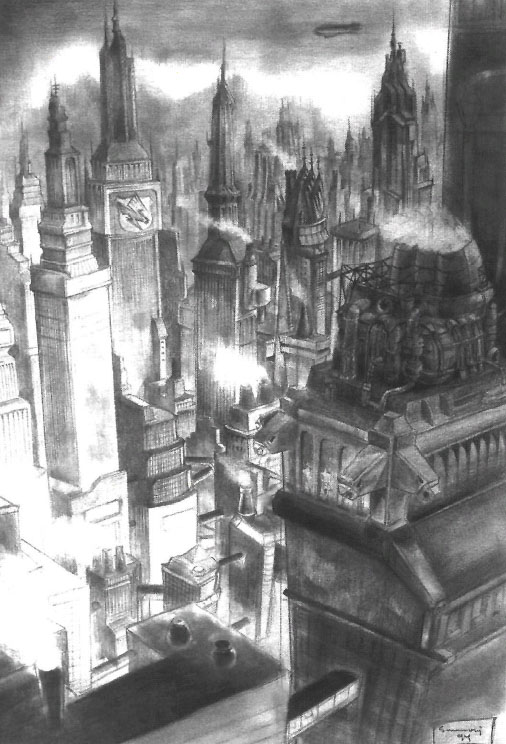
Między potężnymi górami Kirkwood, zboczami gigantycznego krateru Mariner i brzegami Morza Spokoju leży San Dorado, „stolica” Capitolu. Po Lunie jest to największe miasto w Układzie Słonecznym, zawierające większość aktywów Capitolu i duże spuścizny po innych megakorporacjach.
Nie da się określić konkretnego profilu San Dorado, może poza nazwaniem go miastem wszechstronnym. Znajdują się tu wszelkiego rodzaju zakłady przemysłowe, fabryki, placówki usługowe, budynki urzędowe i biura. Północne obrzeża i obszary położone około stu mil na północ od San Dorado charakteryzują się tysiącami szybów naftowych, których wieże pomp rozciągają się na setki metrów w kierunku czystego, błękitnego nieba. Graniczące z tymi polami naftowymi, ważnymi dla życia Capitolu, leżą kopalnie Effenberger, zawierające większość surowców Capitolu.
Mozaika alei i ulic w centrum miasta leży w cieniu drapaczy chmur mieszczących zarówno biura, jak i mieszkania dla pięciu korporacji, głównie Capitolu. Najwyższe z nich mają ponad sto pięter, zapewniając miejsca pracy dziesiątkom tysięcy ludzi.
Mówi się, że San Dorado jest najlepiej zorganizowanym megamiastem w systemie, ale stojąc na ulicy nie sposób tego dostrzec. Patrząc w górę, niebo jest ledwo widoczne z powodu podwyższonych autostrad, skrzyżowań, przejść i torów biegnących między budynkami. Ulica obok jest całkowicie zakorkowana, o ile w ogóle ją widać. Normalna rozmowa jest niemożliwa. Wszędzie słychać klaksony, gwizdy, krzyki i pisk opon. To jest SERCE największej korporacji na świecie i można to poczuć.
Miejsca warte uwagi: Katedra San Dorado, Pałac Prezydencki, Statua Wolności, Piramida, Jedenaście Wież, Korporacyjne Muzeum Capitolu, Wieża Radiowa Donaldsona, Park Handlowy, Wonderland, Technikhaus, Ogrody Stu Pagód, Ziggurat Cybertronicu, Łuk Zwycięstwa, Strefa Przemysłowa 7 (Movietown), Imperialne Muzeum Wojny, Ogrody Wenusjańskie, Pałac Niebios.
Bunkier Kirkwood
Wysoko nad miastem San Dorado wznosi się ogromny bunkier Kirkwood. Jest to wydrążona góra najeżona gigantycznymi wyrzutniami rakiet i ogromną bronią cząsteczkową. Osłania ona San Dorado przed wszelkimi atakami z kosmosu, a także jest koszarami i kwaterą główną Czwartej Armii Capitolu. W czasach zagrożenia obywatelskiego armia ta może zostać przetransportowana helikopterem do San Dorado w celu utrzymania pokoju. Głęboko w tej potężnej fortecy znajduje się szczelnie zamknięty bunkier, do którego prezydent jest zabierany w czasie wojny. Tutaj też znajduje się ogromny sztab wojenny, z którego kontrolowana jest każda wojna toczona na powierzchni Marsa. Zawiera on holograficzną mapę całej powierzchni planety i reprezentacje wszystkich znanych sił wojskowych.
Bezkresne Jaskinie
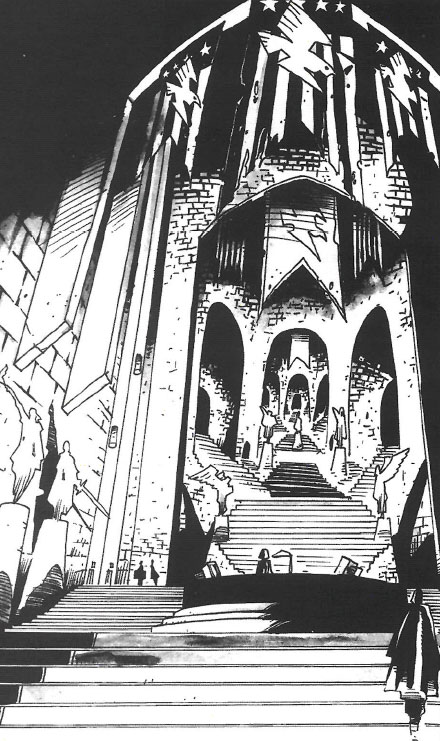
Na południowym krańcu Gór Kirkwood, na obrzeżach Południowych Stref Marsjańskich, znajdują się Bezkresne Jaskinie, spektakularna seria kompleksów jaskiń, które ciągną się przez setki mil przez samo serce gór. Największa z tych jaskiń ma ponad milę średnicy i sto stóp wysokości. Najmniejsza jest ledwie wystarczająco duża, aby dorosły mógł się przez nią przecisnąć. Złoto i cenne minerały zostały tu znalezione w wielkich ilościach, co jest źródłem ropiejących sporów między capitolem a Mishimą.
Dzięki większemu doświadczeniu w budownictwie podziemnym, Mishimowie wyprzedzili swoich rywali z Capitolu i zaczęli powiększać jaskinie. U samego wylotu jaskiń położyli fundamenty nowego miasta Asaka. Capitol chce wydzierżawić jaskinie od Mishimy w taki sam sposób, w jaki Mishima wynajmuje Fukido Imperialowi, ale Mishima odmawia wynajęcia jaskiń Capitolowi. Lady Dziedziczka Mariko twierdzi również, że skoro Mishima podejmuje całe ryzyko, to Mishima powinna czerpać wszystkie korzyści. Jak dotąd Capitolczycy i Mishimowie nie pokłócili się z tego powodu, ale momentami ich relacje są napięte.
Kanały
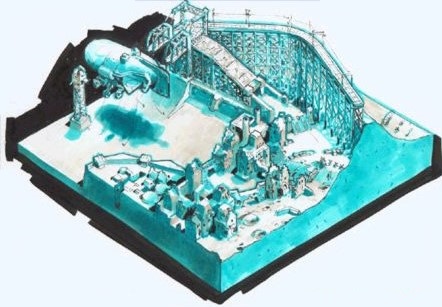
To kolejne dziedzictwo pierwotnych Pionierów, rozległa sieć dróg wodnych, które rozchodzą się od polarnych czap lodowych. To one, podobnie jak koleje, ukształtowały marsjańskie społeczeństwo. Nawadniają one żyzne Ziemie Wolności, które otaczają czapę lodową i są spichlerzem Marsa. Dzięki kanałom Capitol sprawił, że pustynie rozkwitły i przekształcił jałowe pustkowia w jeden z najbardziej produktywnych obszarów na Marsie. To właśnie rozległe projekty rekultywacji terenu prowadzone przez pierwszych Pionierów umożliwiły zasiedlenie znacznej części dzisiejszego Marsa. Po katastrofalnej serii wojen południowomarsjańskich wiele kanałów zamuliło się, w wyniku czego znaczna część południowego Marsa nie nadaje się obecnie do zamieszkania.
Główne kanały są ogromnych rozmiarów. Niektóre z nich mają tysiąc mil długości i milę szerokości. Widziane z lotu ptaka przypominają ogromne wenusjańskie delty rzek. Tylko ich regularność i sieć mniejszych kanałów irygacyjnych, które od nich odbiegają, zdradza fakt, że nie są one dziełem natury. W niektórych miejscach kanały wpadają do ogromnych jezior, takich jak Płytkie Morze i Jezioro Vega. Jeziora te działają jako zbiorniki dla wielu wielkich miast i są stale uzupełniane przez wodę pompowaną z polarnych czap lodowych. Co około sto mil rozmieszczone są tytaniczne stacje pomp, z których każda posiada własną fortecę. Stacje te utrzymują przepływ wody. Wiele z nich znajduje się w pobliżu ogromnych śluz, które przenoszą statki z poziomu na poziom kanałów. W czasach wojny są to często cele wojskowe.
Kanały transportują ogromne ilości towarów. Gigantyczne barki przewożą żywność z Ziem Wolności do węzłów kolejowych. Jeziora orane są przez statki-przetwórnie poszukujące ryb i wodorostów przeładowywanych z Wenus. Wiele mniejszych łodzi wycieczkowych i statków pasażerskich przewozi turystów i zwiedzających wzdłuż wielkich szlaków wodnych.
Cały Departament Generalny jest odpowiedzialny za utrzymanie i konserwację kanałów. Zatrudnia on na pełny etat prawie sto tysięcy budowniczych, którzy zajmują się ich naprawą i przeglądem. Departament Dróg Wodnych ma swoje własne ramię egzekucyjne, Policję Kanałową, której potężne łodzie przemierzają drogi wodne w poszukiwaniu piratów i innych złoczyńców.
Na półkuli południowej Departament dokłada wszelkich starań, by odzyskać i odbudować wielkie kanały, ale jest to powolna praca, utrudniana przez ciągłe ingerencje innych korporacji i Legionu Ciemności.
Cyberopolis
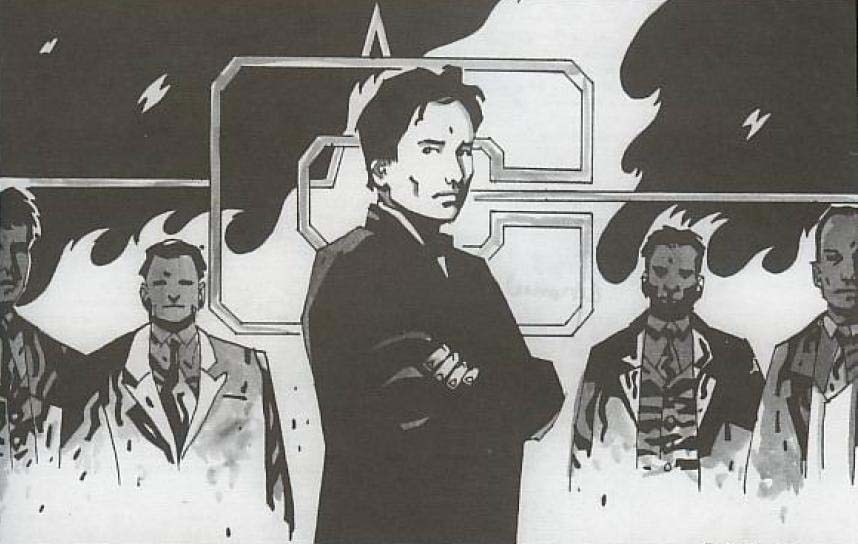
Na odnodze głównej linii kolejowej San-Dorado Hope znajduje się kompleks Cybertronicu znany jako Cyberopolis. To skupisko gigantycznych geodezji zbudowanych na ziemi dzierżawionej od Capitolu i jest jednym z głównych zakładów produkcyjnych Cybertronicu. Obszar ten jest niedostępny dla odwiedzających i jest dostępny tylko na zaproszenie. Osoby, które chciałyby rzucić okiem na najbardziej zaawansowany zakład produkcyjny na Marsie, powinny jeszcze raz się zastanowić. Jest to jeden z najsilniej ufortyfikowanych obszarów na planecie. Złożona sieć czujników i skanerów elektronicznych rozciąga się na wiele kilometrów. Patrole kirasjerów regularnie przeczesują teren, a sterowane przez roboty drony przeszukują niebo, szukając intruzów za pomocą czujnych kamer.
Cały obszar jest usiany ufortyfikowanymi bunkrami zawierającymi przerażające ciężkie roboty bojowe T2000 i wszelkiego rodzaju zautomatyzowane systemy obronne. Nikt nie wie, co tak naprawdę robi tutaj Cybertronic, ale z pewnością obawiają się, że ktokolwiek im to odbierze. Mówi się, że jednym z powodów, dla których Cyberopolis zostało zbudowane tak blisko San Dorado, jest to, że nowa korporacja zawarła tajny traktat obronny z Capitolem w celu ochrony instalacji. Z pewnością prawdą jest, że Cyberopolis produkuje wiele zaawansowanych komponentów, których Capitolczycy nie są w stanie sami zbudować.
Ziemie Wolności
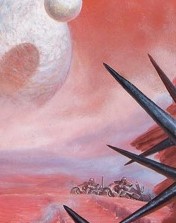
Ziemie Wolności to rozległe, uprawne obszary nawadniane przez północne kanały. Są to słabo zaludnione obszary rancz i małych społeczności obsługiwanych przez kanały i kolej. Odpowiadają one za ponad cztery piąte produkcji żywności w Capitolu i są bardzo dobrze chronione przez AFC. Bazy wojskowe są rozsiane po całych Ziemiach Wolności, a CAF przeprowadza regularne loty zwiadowcze.
Ziemie Wolności obejmują większość północnej półkuli Marsa. Są one najbardziej znanym przykładem doktryny tolerancji Capitolu. Znajdują się tu enklawy osadników z całego systemu, którzy przybyli tu, aby uciec przed prześladowaniami i praktykować wiele dziwnych wyznań i filozofii. Jedyne, co jest tu zabronione, to związki z Mroczną Harmonią i rażące naruszanie praw obywatelskich innych. Pomimo czujności Bractwa i CBI, nieustannie krążą pogłoski o całych miastach, które przeszły na stronę Ciemności. Od czasu do czasu podróżnicy donoszą o miastach, które zostały zbombardowane, więc być może te pogłoski zawierają ziarno prawdy.
Hope
Hope jest stolicą Ziem Wolności. To kolejne ogromne miasto. Hope jest ośrodkiem, w którym dokonuje się uboju bydła z rancz oraz kupuje i sprzedaje zboża i pszenicę z farm fabrycznych. To siedziba ogromnego przemysłu spożywczego Capitolu, produkującego każdy rodzaj przetworzonej żywności, jaki można sobie wyobrazić.
Hope jest także siedzibą słynnego Hope University, największej instytucji akademickiej na Marsie. Studiuje tu ponad dwieście tysięcy studentów, a wiele razy więcej chciałoby studiować. Słynna jest szkoła biznesu, która wykształciła więcej prezesów niż jakakolwiek inna uczelnia. Hope to dziwna mieszanka przygranicznego zagrody dla bydła i wieży z kości słoniowej. Ciągle krążą plotki, że ma tam powstać nowa katedra, ale jak dotąd tak się nie stało. Hope Field jest siedzibą słynnej szkoły szkolenia bojowego CAF, tak zwanej akademii Top Gun. Samoloty Sił Powietrznych Capitolu nieustannie przelatują nad miastem.
Vega

Nad brzegiem jeziora Vega znajduje się miasto hazardu Vega. Jest to ogromne miasto całkowicie oddane hedonizmowi i pogoni za szybkim dolarem. Ulice miasta usłane są ogromnymi kasynami. Nad każdym kasynem migoczą i obracają się hologramy o wysokości pięciuset stóp, z których każdy pokazuje logo pałacu rozkoszy znajdującego się poniżej. Wewnątrz kasyn nie szczędzi się wydatków, aby stworzyć atmosferę luksusu i łatwego wydawania pieniędzy, która szybko oddziela większość odwiedzających od ich pieniędzy. Napoje są darmowe dla graczy. Jedzenie jest tanie i dotowane z zysków. Piękni ludzie są wszędzie. W tych miejscach można znaleźć każdą możliwą formę hazardu, od black jacka, przez ruletkę, po automaty do gry. Nie ma zegarów, a sztuczne światło dzienne uniemożliwia odwiedzającym zorientowanie się, która jest godzina. Jezioro roi się od statków-kasyn. Dzielnica czerwonych latarni wokół doków jest najbardziej niesławną na Marsie. Ludzie przyjeżdżają tu z całego świata i przegrywają małe i duże fortuny.
Istnieje cały przemysł, który zapewnia odwiedzającym wszystko, czego mogą zapragnąć, legalnie lub nielegalnie. Gangsterzy i przestępczość są na porządku dziennym, ale o dziwo Vega ma znacznie niższy wskaźnik przestępczości niż jakiekolwiek inne miasto na terytorium Capitolu. Nikt nie chce robić niczego, co mogłoby odstraszyć frajerów, więc morderstwa zwykle ograniczają się do porachunków gangsterskich z rywalizującymi gangsterami. Samodzielne kradzieże są zdecydowanie źle widziane, a sprawiedliwość wymierzana przez władców gangów jest surowsza i szybsza niż ta wymierzana przez korporację.
Bractwo zdecydowanie nie pochwala Vegi, ale ponieważ miasto znajduje się na Ziemiach Wolności, niewiele można na to poradzić. Dyrektorzy nie protestują zbytnio, ponieważ Capitol otrzymuje ogromną część dochodów z tej operacji.
Wielka Rdzawa Pustynia
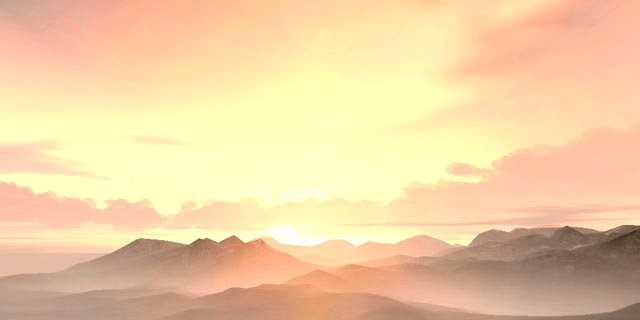
Wielka Rdzawa Pustynia rozciąga się w połowie równika marsjańskiego. Obszar ten nie został nawodniony i nadal jest dzikim i nieokiełznanym pustkowiem zamieszkałym przez nomadów i poszukiwaczy. Odkąd Wojny Południowomarsjańskie zniszczyły znaczną część południowej sieci kanałów, Rdzawa Pustynia powoli rozszerza się na południe, zamieniając niegdyś żyzną ziemię z powrotem w pustynię. Wielkie pełzacze piaskowe przemierzają pustynię, zasysając bogaty w żelazo pył i wydobywając rudy. Wszystkie one gromadzą się w ogromnym mieście Valley Forge. Od czasu przybycia Legionu Ciemności krążą pogłoski o gigantycznych bestiach, które drążą tunele pod Morzami Piasku i wyłaniają się, by połknąć gąsienice jednym haustem. W chwili obecnej prawdziwość tych pogłosek nie została jeszcze potwierdzona.
Wielka Pustynia jest również domem dla plemion Nomadów. Są to potomkowie pionierów, którzy wybrali wędrowny styl życia w pierwszych dniach osadnictwa. Wielu z nich to fanatycy religijni. Najbardziej znani z nich to Zealoci, którzy wierzą, że koniec ludzkości jest bliski, a przybycie Legionu Ciemności zwiastuje nadejście Apokalipsy. Niektóre z tych plemion są wrogo nastawione.
Często podczas lotów zeppelinami nad Rdzawą Pustynią można zobaczyć wielkie karawany pojazdów i zwierząt przemieszczające się od jeziora do jeziora. Jeziora powstały w miejscach kraterów, powstałych jeszcze przed okresem tarraformowania planety. Mogą być wypełniane przez podziemne studnie lub inne dziwne procesy. Wiele z nich ma swój własny mikroklimat. Niektóre z tych jezior są domem dla klasztorów Bractwa.
Valley Forge
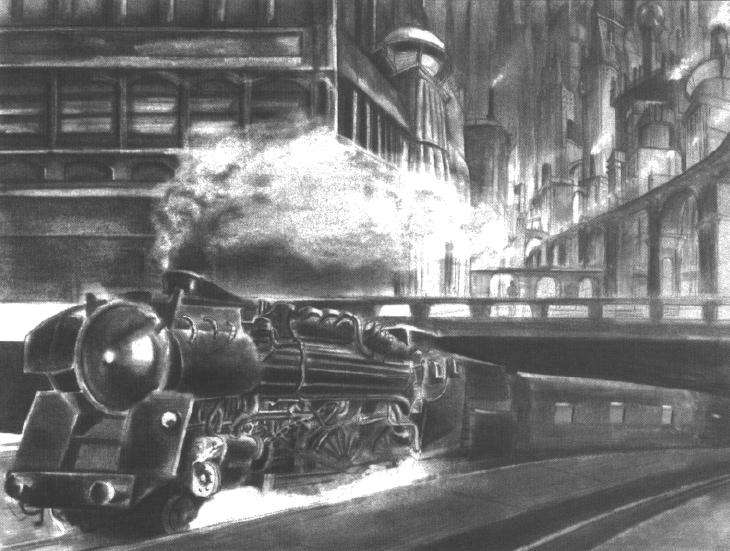
Nazywane jest „miastem zbudowanym ze stali” i jest to najbardziej rentowne miasto korporacyjne. Jest własnością spółki zależnej Capitol’s Universal Steel i jest całkowicie poświęcone produkcji stali i rafinacji metalu. Nocą płomienie ogromnych hut rozświetlają niebo na setki mil. Smród kuźni można wyczuć w odległości dwudziestu mil. Z jego wielkich hut zjeżdżają z linii montażowych metale, które trafiają do samochodów, samolotów i kolei Capitolu. Podobno produkuje się tu 25% całej stali w Układzie Słonecznym. Z powodu zanieczyszczeń przemysłowych nie jest to przyjemne miejsce do zwiedzania. Warto jednak zobaczyć Valley Forge Monument, ogromną stalową iglicę o wysokości tysiąca stóp na obrzeżach miasta. Została ona wykonana z całego złomu zebranego z pola bitwy Valley Forge. Upamiętnia ona miejsce jednej z największych i najbardziej nieudanych prób zaanektowania własności Capitolu przez Imperial. Ponad sto tysięcy żołnierzy straciło życie, gdy wojska Imperialu próbowały przejąć miasto. Oblężenie Valley Forge trwało ponad rok, a walki toczyły się od domu do domu i od fabryki do fabryki, zanim miasto zostało ostatecznie wyzwolone.
Góra Erebus
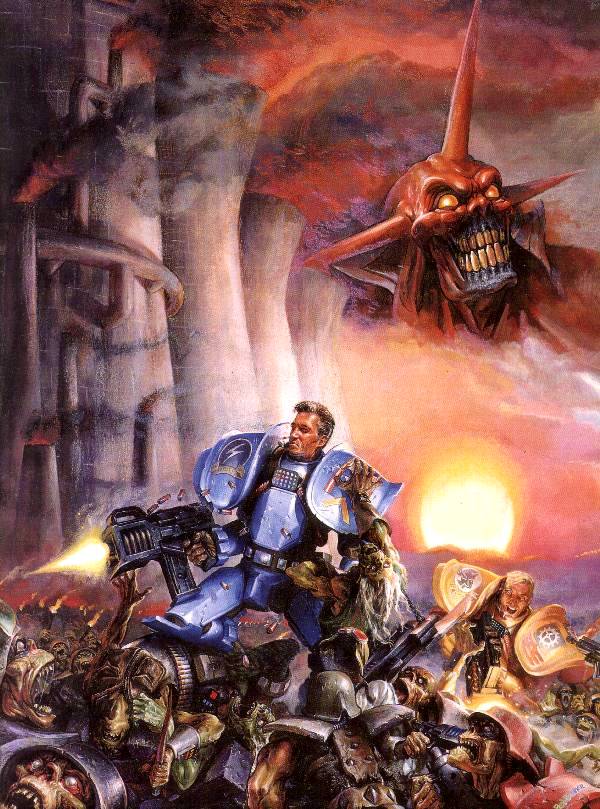
Góra Erebus to bardzo rzadki widok – to opuszczona Cytadela Legionu Ciemności. Oczywiście jest znacznie mniejsza niż Cytadela Saladyna, ale ma jedną wielką cechę wyróżniającą. Góra, na której zbudowano Cytadelę, ma jedną stronę wydrążoną i wyrzeźbioną na podobieństwo twarzy Nefaryty Malakhaia. Jakikolwiek proces stworzył tę ohydę, czyni ją również odporną na największe wysiłki Capitolu i Bractwa, aby ją zniszczyć lub usunąć. Próbowano wszystkiego – materiałów wybuchowych, wierceń, sztuki – ale nic nie zadziałało. Krzywe oblicze zła wciąż pozostaje i przeraża wszystkich widzów swoim ponurym majestatem. Góra Erebus jest widoczna z głównej linii kolejowej z San-Dorado do Burroughs, choć niewielu chce oglądać tego złego kolosa dłużej niż kilka minut. Niewielki oddział wojowników Bractwa czuwa nad ruinami zniszczonej Cytadeli i ostrzega wszystkich intruzów.
Dolina Tysiąca Skał
W pobliżu małego miasteczka Clarkesville, na samym skraju Rdzawej Pustyni, znajduje się jeden z największych cudów Układu Słonecznego – Dolina Tysiąca Skał. W tej zacisznej dolinie znajduje się sto tysięcy sześciokątnych filarów o wysokości od stu do tysiąca stóp. Na bokach każdego z nich wyryto hieroglify w jakimś obcym piśmie. Capitolscy naukowcy datują te filary na ponad pięć milionów lat, ale jak dotąd nikt nie wyjaśnił, w jaki sposób się tam znalazły. Nigdzie indziej na Marsie nie ma żadnych śladów obcej cywilizacji. Najpopularniejszą teorią jest to, że są one pewnego rodzaju pomnikiem pozostawionym tutaj przez obcych podróżników podróżujących od systemu do systemu. Druga najpopularniejsza teoria głosi, że są one swego rodzaju pozostałością po Legionie Ciemności, choć obserwatorzy Bractwa nie znaleźli w nich żadnych śladów Mrocznej Harmonii.
Południowe Ziemie

W strasznych czasach Mrocznych Wieków, zanim pojawił się Kardynał, by zjednoczyć ludzkość, inne korporacje spoglądały łakomym okiem na bogate ziemie Marsa. Najbogatsze ze wszystkich domen Capitolu były Południowe Ziemie Wolności. To właśnie ich pożądały inne korporacje. Najpierw wylądowali Mishimowie, potem Imperialczycy, a na końcu pojawili się budowniczowie domów z Bauhausu. Tak rozpoczęła się straszliwa seria wojen południowomarsjańskich i okropny czas, w którym korporacja walczyła z korporacją w zaciekłej walce o dominację. Wojna szalała na całym południowym Marsie. Zawiązywano sojusze i dokonywano zdradzieckich ataków. Wkrótce Południowe Ziemie Wolności, niegdyś najbardziej zielona i zamożna część całego Marsa, pogrążyły się w niekończącej się walce. Miasta legły w gruzach. Uderzenia chemiczne zamieniły pola uprawne w pustynię. Linie kolejowe zostały zniszczone. Kanały zostały zablokowane. Pustynia powróciła, a południowy Mars stał się jałową krainą zarośli, o którą walczyły zwaśnione frakcje.
Potem nadszedł kardynał Nathaniel i traktat z Heimburski, który na jakiś czas zakończył wszelkie działania wojenne. Południowy Mars został ogłoszony wolną strefą, otwartą dla wszystkich, którzy chcieli ją odbudować. Capitolowi się to nie spodobało, ale po długich wojnach należało wykorzystać każdą szansę na pokój. Południowy Mars jest teraz zamieszkany przez ludzi ze wszystkich korporacji i nadal jest jednym z najbardziej skonfliktowanych obszarów w systemie.
Obecnie południowy Mars to opustoszałe miejsce, odległe i niedostępne. Znajdują się na nim tysiące maleńkich osad, w których dzielni ludzie żyją w niepewności, a także kilka wielkich miast, centrów władzy wielkich korporacji. Wszystkie z nich, z wyjątkiem Imperialu, podążają za wzorem ekspansji na zewnątrz swoich wielkich, ufortyfikowanych miast. Jak zwykle Imperial rozprzestrzenia swoje osady wszędzie tam, gdzie może zdobyć przyczółek lub dostrzec przewagę.
Region jest, jak zawsze, polem zapalnym, ponieważ wszystkie korporacje pragną więcej terytorium, nie tylko Capitol, który chce odzyskać utracone ziemie. Jest to punkt zapalny dla potencjalnych konfliktów, ponieważ tutaj korporacje toczą potyczki i sondują, testując się nawzajem pod kątem jakichkolwiek oznak słabości. Sytuację skomplikowało pojawienie się Legionu Ciemności, który zbudował wiele pomniejszych Cytadel w całym regionie i który wykorzystuje wszelkie nowe konflikty między siłami ludzkości. Można by pomyśleć, że wszystkie wrogości znikną w obliczu wspólnego wroga, ale tak nie jest. Głupota i słabość ludzkości nie ma końca. Jeśli nalot Legionu Ciemności osłabi obronę jednej korporacji, inne zlatują się jak sępy, by wykorzystać tę okazję. Cartel próbował mediacji w tych sporach ale zawiódł, a sytuacja z dnia na dzień staje się coraz bardziej krytyczna.
Południowe Ziemie nie są dobrym miejscem do podróżowania. Trans-Martian kursuje teraz tylko do miast Capitolu. Aby dotrzeć do osad innych korporacji, trzeba podróżować sterowcem lub pojazdem z napędem na cztery koła przez niebezpieczne tereny. To miejsce, w którym odważni poszukiwacze przygód mogą zarobić fortunę lub zginąć w ciągu tygodnia. Z pewnością nie jest to miejsce dla turystów.
Burroughs
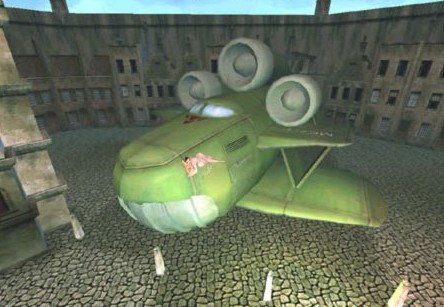
Burroughs jest siedzibą Anty-Legionowego Dowództwa AFC i miejscem, w którym znajduje się druga katedra Marsa. Jest to główna stacja kolejowa dla McCraig Line. Niegdyś mało znane miasto na odległym i niezaludnionym obszarze, Burroughs szybko stało się drugim miastem Marsa. Ogromne sumy pieniędzy przeznaczono na stworzenie fabryk uzbrojenia i samolotów, a Burroughs jest obecnie największą bazą wojskową Capitolu. Obóz Burroughs na obrzeżach miasta szkoli obecnie prawie jedną czwartą całego personelu AFC. Czasami Burroughs przypomina miasto żołnierzy – wydaje się, że na ulicach jest więcej umundurowanych ludzi niż cywilów. Noce wypełnia dudnienie samolotów startujących z Burroughs Field, by bombardować legionistów za Linią McCraiga.
Mówi się również, że Burroughs jest siedliskiem intryg, w którym agenci megakorporacji walczą o kradzież tajemnic wojskowych Capitolu, a heretycy nieustannie próbują infiltrować szeregi AFC.
Nie trzeba dodawać, że jest tu także wielu członków Bractwa. Wokół katedry znajduje się ich enklawa. Inkwizytorzy i misjonarze krążą po ulicach. Katedra dominuje nad panoramą miasta. Stały strumień uczonych i pielgrzymów przybywa, by studiować Piątą Kronikę – Algerotha i Dernnogonisa za jej murami.
Edison
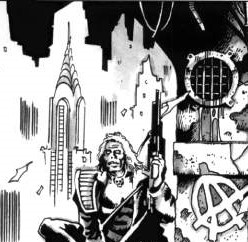
Nad brzegiem Morza Suchego leży miasto Edison. Niegdyś było ono znane jako Miasto Przyszłości. To tutaj, przed Wojnami Południowomarsjańskimi, naukowcy Capitolu pracowali nad tworzeniem nowych wynalazków i produktów dla korporacji. Edison ucierpiało najbardziej, gdy nadeszła Ciemność. Wiara w postęp i naukę została zniszczona, a wielu z tych, którzy pracowali nad tajnymi projektami, oszalało. Całe miasto zostało zniszczone przez gigantyczną eksplozję. Teraz ruiny miasta stoją niczym pomnik zniszczonych marzeń Pionierów. Z gruzów wciąż wyrastają stalowe szkielety gwiezdnych drapaczy chmur, ale pustynne zaspy piasku zasypują ulice. Gdzieniegdzie widać jeziora stopionego szkła. Potwory czają się w cieniu, a mutanty zamieszkują podziemne tunele.
Edison nie jest jeszcze całkowicie martwe. Poza ruinami znajduje się mała społeczność, w której zgromadzili się złomiarze. Z ufortyfikowanego miasta wciąż wyruszają grupy poszukiwaczy w nadziei na odzyskanie zaginionego sekretu starożytnych. W rzeczywistości większość z nich to szaleńcy kierowani nadzieją lub głupotą. Miasto zostało już dawno przeszukane przez służby Capitolu, a starożytne sekrety zostały odnalezione. Jednak co kilka lat ktoś wciąż natyka się na ukrytą starożytną skrytkę i sprzedaje sekrety za fortunę. To właśnie tego typu plotki przyciągają do Edison wędrowców, zagubionych i zdesperowanych.
Suche Morze było niegdyś największym zbiornikiem wodnym południowych krain. Teraz jest całkowicie martwą, spieczoną równiną, z której wyłaniają się częściowo pogrzebane szczątki wielkich statków.
Lawrence i Mandat Imperialu
Imperial zdołał przejąć i utrzymać spory kawałek ziemi między Linią McCraiga a Wielką Rdzawą Pustynią. Po zakończeniu działań wojennych na mocy traktatu z Heimburga obszar ten został przekazany Imperialowi przez Capitol. W tamtym czasie uważano go za dość bezwartościowy, ale od tego czasu odkryto cenne złoża rudy i kopalnię lodu, a Mandat jest jedną z najlepiej prosperujących części imperialnej domeny. Przybycie Legionu Ciemności zapobiegło capitolskiej próbie odbicia Mandatu z rąk Imperialu.
Chociaż obszar ten jest obecnie dość suchy, Imperial zbudował tu jedno duże ufortyfikowane miasto: Lawrence, imperialne centrum handlowe. Jego populacja zwiększa się dzięki obecności wielu koczowniczych poszukiwaczy, którzy przeszukują pustynię w poszukiwaniu złota, klejnotów i starożytnych artefaktów. Obecność Cytadeli Saladyna w pobliżu oznacza, że Lawrence zyskało ostatnio silną obecność agentów ISC. Zgodnie z imperialną tradycją, Lawrence jest bardzo dobrze bronionym miejscem. Wokół Lawrence rozrzucone są dziesiątki mniejszych imperialnych osad i przedsiębiorstw.
Strathgordon
W połowie drogi od Mandatu, wysoko pośród szczytów Gór Marinera, wznosi się ponura imperialna forteca Strathgordon. Na wpół zamek, na wpół ogromny bunkier, Strathgordon znajduje się na szczycie jednej z najgłębszych i najbardziej dochodowych kopalni klejnotów na Marsie. Podnóża góry pokryte są bunkrami i polami minowymi, a cała powierzchnia szczytu najeżona jest bronią obronną. Strathgordon jest bazą legendarnych Wojowników Imperialnego Góralskiego Klanu.
W swojej długiej historii ten gigantyczny fort był przedmiotem większej liczby ataków niż jakiekolwiek inne miejsce na Marsie. Nigdy jednak nie upadł. Według jednej ze starożytnych przepowiedni, gdy tak się stanie, Imperial czeka zagłada.
Klasztor Karkov

W Górach Marinera, w pobliżu Strathgordon, znajduje się wielka forteca-klasztor Bractwa znana jako Klasztor Karkov. Znajduje się on na szczycie wysokich na 1000 stóp klifów Karkov, z widokiem na wielki wodospad Silverspray. W tym ogromnym kompleksie ponad tysiąc Braci studiuje Sztukę i przygotowuje się poprzez medytację i post do powrotu do krain ludzkości i walki z Ciemnością. Ciemne cele pod klasztorem są również domem dla Pokutników, grupy braci, którzy w jakiś sposób zawiedli w swoich obowiązkach, a teraz złożyli ślub milczenia i pokory, dopóki Przeor klasztoru nie uzna, że są gotowi do powrotu do aktywnej służby. Pokutnicy wykonują najskromniejsze i najcięższe prace w Oratorium Karkowskim, ucząc się na nowo znaczenia ślubu posłuszeństwa wobec Kardynała.
Cytadela Absaloma
Niecałe sto mil od Strathgordon znajduje się Cytadela Absaloma. Choć jest ona mniejsza niż Cytadela Saladyna, jest nie mniej potężna, ponieważ została wbudowana w rdzeń góry. Zły Nefaryta Absalom dobrze zna starożytną przepowiednię dotyczącą Strathgordon i jego niekończącym się zadaniem jest doprowadzenie do zagłady tego miasta. Przynajmniej raz w miesiącu jego siły nacierają na oblężone miasto Imperialu i próbują je przejąć. Przynajmniej raz w miesiącu Imperial przeprowadza kontratak. Jak dotąd siły były wyrównane i żadna z nich nie zdobyła przewagi.
Hosokawa
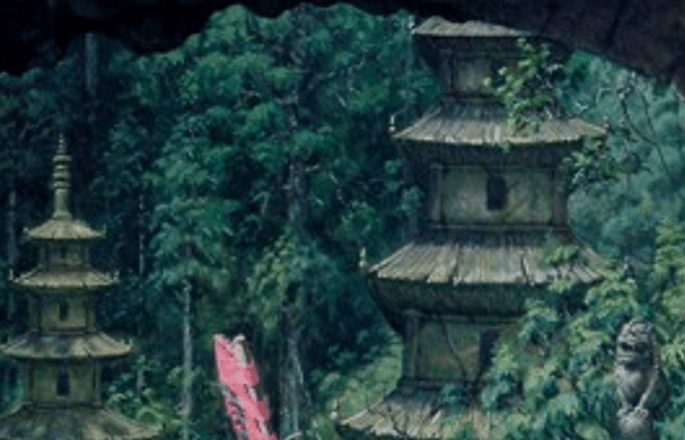
To piękne miasto jest stolicą Lady Dziedziczki Mariko i centrum władzy Mishimów na Marsie. W jego sercu znajduje się Pałac Niebios, który został wiernie odtworzony w San Dorado. W Hosokawie pałac jest jednak otoczony innym, potężniejszym pierścieniem obronnym, setkami stanowisk, bunkrów i koszar, które są tak sprytnie wyrzeźbione w krajobrazie otaczającego parku, że są prawie niezauważalne. Służy to podwójnemu celowi – upiększeniu parku i zakamuflowaniu broni. Reszta miasta jest zbudowana w klasycznym stylu Mishimy i jest pełna otwartych przestrzeni, świątyń i pięknych budowli. Jest ono również otoczone otwartym terenem do bitew, pełnym punktów obronnych.
Hosokawa znajduje się w centrum pierścienia osad, który rozciąga się na prawie 1000 mil w kierunku południowej polarnej pokrywy lodowej. Mishima podjęła poważny wysiłek, aby odzyskać tę część Marsa, odbudowując kanały, ponownie sadząc ziemię i ponownie otwierając wszelkiego rodzaju osady. Nieustannie utrzymuje się wysokie napięcie z Capitolem, który pragnie odzyskać utracone ziemie. Ale po zainwestowaniu tak wiele w ten obszar, Mishima po prostu nie może sobie na to pozwolić. Ogromne połacie ziem Mishimów są nieustannie kwestionowane przez AFC i wojowników Lady Dziedziczki.
Czerwone Słońce
Red Sun jest największym koncernem prasowym w Mishimie. Publikuje gazety, magazyny, książki i komiksy zarówno w katakanie, jak i w alfabecie bractwa. Jest właścicielem sieci stacji radiowych i kin w większości dużych miast w całym Układzie Słonecznym (z wyjątkiem Merkurego). Red Sun udziela licencji na filmy o sztukach walki i kreskówki Mishimów firmom Capitolu i Imperialu. Zajmuje się również sprzedażą zabawek i gier bazujących na jej produktach. Szczególnie popularne są plastikowe figurki Tatsu i Meka bojowego. Ponieważ powiązania Red Sun z rozrywką rozciągają się na cały Układ Słoneczny, firma ta ma ogromne wpływy zarówno w społeczeństwie Mishimów, jak i na dworze Mariko. Oczywiście Czerwone Słońce utrzymuje własną flotę, zwaną Gwardią Czerwonego Słońca, największą w Układzie Słonecznym. Gwardia Czerwonego Słońca jest jedną z najpotężniejszych sił bojowych w ludzkich światach.
Shinwa
Shinwa to gigantyczny konglomerat zajmujący się wszystkim, od wydobywania piasku, przez wytapianie stali i budownictwo, po produkcję pancerzy wspomaganych i Tatsu. Kontroluje ją kuzyn Lady Mariko, Lord Dowódca Shinwa Akabe, który jest fanatycznie oddany swojej pani. Niektórzy twierdzą, że Shinwa jest największym Keiretsu Mishimy, z większą sprzedażą i przychodami niż nawet Suritomo. Shinwa to także największa stała armia Mishimy. Shinwa jest finansowym i militarnym wsparciem, od którego Lady Mariko jest mocno uzależniona.
Amida
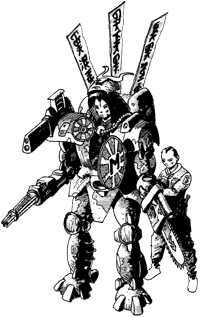
Amida jest największym Keiretsu lotniczym Mishimy. Swoją dominującą pozycję w Mishimie zawdzięcza temu, że szpieguje wiodący przemysł lotniczy Capitolu oraz temu, że duże Keiretsu na Merkurym nie weszły na pole lotnicze. Amida produkuje wszystko, od automatycznych żyrokopterów, przez zeppeliny, rakiety, aż po statki kosmiczne. Amida posiada również własną linię dość skutecznych pocisków ziemia-powietrze. Amida ma również swój udział w branży elektronicznej, produkując wojskowe radary i systemy kontroli ruchu lotniczego. Amida sprzedaje swoje produkty każdemu, kto chce je kupić, w tym konkurencyjnym Lordom Dziedzicom. Robi to z pełnym błogosławieństwem Mariko. Docenia ona przychody, jakie przynosi ten biznes. Ze względu na swoją przewagę w dziedzinie lotnictwa, Amida posiada najsilniejsze siły powietrzne w Mishimie. Wielu jej samurajów jest wyszkolonych na pilotów. Wszyscy pozostali są wyszkoleni w służbie powietrznej. Amida jest najbardziej znana ze swoich Aeromeka – skafandrów bojowych z napędem rakietowym, które mogą latać nad polem bitwy, wystrzeliwując potężne rakiety ze swoich naramienników.
Mundburg
Mundburg to jedyna duża osada Bauhausu na Marsie. Znajduje się w pobliżu bieguna południowego, na skraju pustkowi niekończącego się lodu. Samo miasto Mundburg jest samotnym miejscem, pomimo swoich ogromnych rozmiarów. Słynie z dwóch rzeczy: jest siedzibą Zakonu Lodowego Niedźwiedzia – jednego z najbardziej udanych zakonów wojskowych Bauhausu – i jest zbudowany na siedmiu wyspach, z których każda może zostać szybko przekształcona w fortecę w przypadku ataku.
Mundburg miał być centrum prób przejęcia przez Bauhaus kawałków południowego Marsa, ale przybycie Legionu Ciemności na Wenus sprawiło, że większość zasobów Budowniczych Domów została skierowana z powrotem na ich ojczystą planetę. Dziś Mundburg znajduje się w centrum niewielkiego obszaru osad Bauhausu, na który inne korporacje patrzą z zazdrością. Spowodowało to, że jego mieszkańcy stali się sławnymi wojownikami, ponieważ niewiele pomocy nadchodzi z Wenus, gdy zaczynają się ataki. Do tej pory Imperial przeprowadził ponad pół tuzina nieudanych ataków na Mundburg. Być może następny się powiedzie.

Luna City Courier

Mars
Diameter: 6794 km
Mean Distance from Sun: 227,940,000 km
Day Length: 24 hrs, 37 min
Orbital Period in Earth Days: 687 days
Moons: Phobos, Deimos
Major Cities: San Dorado, Cyberopolis, Hope, Vega, Burroughs, Lawrence, Hosokawa, Red Sun, Shinwa, Amida, Mundburg
Mars is the second world to be terraformed, given an Earth-like atmosphere, gravity, and environment, though much of Mars is still covered by vast tracts of red desert — collectively referred to as the Great Rust Desert. Mars does indeed have canals now, thanks to Capitolian attempts to irrigate crops. A rather large expanse of land has been dubbed the „Freedom Lands”, as Capitol has opened it up for anyone who is willing to rebuild it after the devastations wrought by the Dark Legion — even people from other corporations. Mars is mostly wide open, flat lands, whether desert or rolling plains, with its cities connected by means of wide-ranging railroads that encircle the globe, to an extensive highway system, to travel by means of aircraft — Capitol’s specialty.
Another location of note would be San Dorado. This is a city far from the warzones, a place of bright neon lights, highways clogged with cars, and everything garish and distinctly Capitolian.
San Dorado
Cradled between the mighty Kirkwood mountains, the slopes of the gigantic Mariner crater and the shores of the Sea of Tranquillity, lies San Dorado, Capitol’s „Capital”. After Luna, it is the largest city in the solar system, containing most of Capitol’s assets and large legacies from the other megacorporations.
It is impossible to set a certain profile to San Dorado, except maybe by calling it an well-rounded city. It contains all kinds of industries, factories, service establishments, official buildings and offices. The northern outskirts and the areas some hundred miles north of San Dorado are characterized by thousands and thousands of oil wells, their pump-towers stretching hundreds of meters towards the clear-blue sky. Bordering these oil-fields, life-important for Capitol, lie the Effenberger mines, containing a LOT of Capitol’s raw materials.
The patch-work of avenues and streets downtown lie in the shadow of skyscrapers containing both offices and apartments for the five corporations, primarily Capitol. The tallest are more than a hundred stories, providing places of work for tens of thousands of people.
San Dorado is said to be the most wellorganized megacity in the system, but when you are standing in the street it is impossible to see how. Looking up, the sky is barely visible due to the elevated highways, intersections, passages and rails running between the buildings. The street beside you is completely jammed, if you can see the street at all. Normal conversation is impossible. Everywhere car horns, whistles, shouts and screeching tires are heard. It is the HEART of the largest corporation in the world, and you can feel it.
Places of Note: San Dorado Cathedral, The Presidential Palace, The Statue of Freedom, The Pyramid, The Eleven Towers, Capitol Corporate Museum, Donaldson Radio Tower, Commerce Park, Wonderland, Technikhaus, Hundred Pagoda Gardens, The Cybertronic Ziggurat, The Arch of Victory, Industrial Zone Seven (Movietown), Imperial War Museum, Venusian Gardens, Palace of the Skies
Kirkwood Bunker
High above the city of San Dorado soars the enormous Kirkwood Bunker. This is a hollowed-out mountain bristling with gigantic missile launchers and enormous particle beam weapons. It shields San Dorado from any spaceborne attack and is also the barracks and headquarters of Capitol’s 4th Army. In times of civic emergency, this army can be rushed to San Dorado by helicopter to keep the peace. Deep within this mighty fortress is the sealed bunker to which the President is taken in times of war. Here also is the huge war room from which any surface war fought on Mars is controlled. It contains a holographic map of the entire planetary surface and representations of all the military forces known to be present.
The Endless Caverns
At the southern tip of the Kirkwood Mountains on the edges of the South Martian Warzones lie the Endless Caverns, a spectacular series of cave complexes that run for hundreds of miles through the’ very heart of the mountains. The largest of these caves is over a mile across and a hundred feet high. The smallest is barely large enough for an adult to squeeze through. Gold and precious minerals have been found here in abundance, a festering source of dispute between Capitol and Mishima.
With their greater experience of underground building, the Mishimans have stolen a march on their Capitolian rivals and begun to enlarge the caves. At the very mouth of the caverns, they’ve laid the foundations of the new city of Asaka. Capitol wants to lease the caves to Mishima in the same way as Mishima leases Fukido to Imperial, but Mishima denies that the caves are Capitol’s to rent out. The Lord Heiress Mariko also claims that, since Mishima is taking all the risks, Mishima should take all the rewards. So far, the Capitolians and the Mishimans have not come to blows over this, but it does strain their relationship at times.
The Canals
These are another legacy of the original Pioneers, a vast web of waterways that fan out from the polar icecaps. These, as much as the railways, have shaped Martian society. They irrigate the fertile Freedom Lands that surround the icecap and are the breadbasket of Mars. With the canals, Capitol has made the deserts bloom and transformed arid wilderness into one of the most productive areas on Mars. It was the vast land reclamation projects of the early Pioneers that made the settlement of much of present-day Mars possible. Following the disastrous series of South Martian Wars, many of the canals silted up, and in consequence, much of Southern Mars is now uninhabitable.
The major canals are enormous in size. Some are a thousand miles long and a mile wide. Seen from the air, the networks resemble enormous Venusian river deltas. Only their regularity and the webs of smaller irrigation canals that run off them gives away the fact that they are not of nature. In places, the canals feed into huge lakes such as the Shallow Sea and Lake Vega. These lakes act as reservoirs for many great cities and are constantly replenished by water pumped down from the polar icecaps. Dotted along every hundred miles or so are titanic pumping stations, each with its own fortress. These stations keep the waters flowing. Many are near huge locks which move ships from level to level on the canals. In times of war, these are often military targets.
The canals carry a tremendous amount of shipping. Gigantic grain barges carry food from the Freedom Lands to the railroad hubs. The lakes are plowed by factory ships seeking fish and kelp transshipped in from Venus. Many smaller pleasure boats and passenger ships carry tourists and sightseers along the great waterways.
One entire General Department is responsible for the upkeep and maintenance of the canals. It employs a corps of nearly a hundred thousand builders full time to repair and survey them. The Waterways Department has its own enforcement arm, the Canal Police, whose powerful launches cruise the waterways in search of pirates and other malefactors.
In the southern hemisphere, the Department is doing its best to reclaim and rebuild the great canals, but it’s slow work, hampered by continual interference by the other corporations and the Dark Legion.
Cyberopolis
Located on a spur of the main San-Dorado Hope rail line is the Cybertronic complex known as Cyberopolis. This cluster of giant geodesics built on land leased from Capitol, and it is the of one Cybertronic’s main production plants. This area is off limits to visitors and is accessible by invitation only. People tempted to sneak a look at the most advanced production plant on Mars should think again. This is one of the most heavily fortified areas on the planet. A complex web of sensors and electronic scanners lies for miles around. Patrols of cuirassiers make regular sweeps, and robot-controlled drone aircraft scour the skies, searching for intruders with unblinking camera eyes.
The whole area is dotted with fortified bunkers containing the dread T2000 heavy combat robots and all sorts of automated defense systems. No one knows what Cybertronic is really doing here, but they certainly seem to fear anybody taking it away from them. It is said that one of the reasons that Cyberopolis was built so close to San Dorado is because the new corporation has a secret defense treaty with Capitol to protect the installation. It is certainly true that Cyberopolis manufactures many advanced components which the Capitolians are incapable of building for themselves.
The Freedom Lands
The Freedom Lands are the vast, cultivated areas irrigated by the northern canals. They are a thinly populated area of ranches and tiny communities serviced by the canals and the railroad. They are responsible for over four fifths of all Capitol’s food production, and are extremely well protected by the AFC. Military bases are dotted Fight throughout the Freedom Lands, and the CAF makes regular scouting sorties. The Freedom Lands cover most of the northern hemisphere of Mars. They are the most famous examples of Capitol’s doctrine of tolerance. Here are enclaves of settlers from all over the system, who have come here to escape persecution and practice many strange faiths and philosophies. The only things forbidden here are involvement with Dark Symmetry and gross violations of others’ civil rights. Despite the vigilance of the Brotherhood and the CBI, there are persistent rumors of entire towns that have gone over to the Dark. Now and then, travelers report sighting towns that have been bombed flat, so perhaps these rumors contain some truth.
Hope
Hope is the Capital of the Freedom Lands. It is another huge city. Hope is the hub where cattle from the ranches are slaughtered and grains and wheat from the factory farms are bought and sold. It the home of Capitol’s huge food industry, churning out every sort of processed food imaginable.
Hope is also the home of the famous Hope University, the largest academic institution on Mars. Over two hundred thousand students study here, and many times that number would like to. The business school is famous, having produced more Presidents than any other seat of learning. Hope is a strange blend of frontier cattle town and ivory tower. There are constant rumors that a new Cathedral is going to be built there, but so far this has not happened. Hope Field is the home of the CAF’s famous Air Combat Training School, the so-called Top Gun academy. Planes of the Capitol Air Force constantly fly over the city.
Vega
Situated along the shores of Lake Vega is the gambling city of Vega. This is a huge city given over completely to hedonism and the pursuit of a quick Dollar. The city streets are lined by enormous casinos. Over each casino, five-hundred foot-high holograms flicker and twist, each showing the logo of the pleasure palace below. Inside the casinos, no expense is spared to create an atmosphere of luxury and easy spending that soon separates most visitors from their money. Drinks are free to gamblers. Food is cheap and subsidized from profits. Beautiful people are everywhere. Every form of gambling game imaginable, from black jack to roulette to slot machines, can be found in these places. There are no clocks, and artificial daylight prevents the visitors from ever thinking about what time it is. The lake swarms with casino ships. The red-light district around the docks is the most infamous on Mars. People come here from all over and gamble away large and small fortunes.
There is a whole cut-throat industry given over to providing the visitor with everything he or she might want, legal or illegal. Gangsters and crime are common, but surprisingly, Vega has a much lower crime rate than any other city in Capitolian territory. Nobody wants to do anything that might scare the suckers away, so murders are usually limited to gangland hits on rival mobsters. Independent robbery is Strongly frowned upon, and the justice dispensed by the gang lords is rougher and swifter by far than that of the corporation.
The Brotherhood strongly disapproves of Vega, but since the city is in the Freedom Lands, there is little that can be done about. The Directors don’t protest too much because Capitol gets a huge chunk of revenue from this operation.
The Great Rust Desert
Stretching halfway around the Martian equator is the Great Rust Desert. This area has not been irrigated and is still a wild and untamed wilderness populated by nomads and prospectors. Since the South Martian Wars destroyed much of the southern canal network, the Rust Desert is slowly expanding south again, turning once-fertile land back to desert. Here great sandcrawlers move across the desert, sucking in the iron-rich dust and extracting the ores. These all congregate on the enormous town of Valley Forge. Since the coming of the Dark Legion, there are rumors of giant beasts tunneling below the Sand Seas and emerging to swallow sandcrawlers at a gulp. At the moment, the truth of these rumors has yet to be confirmed.
The Great Desert is also the home to the Nomad tribes. These are descendants of the pioneers who opted for a wandering lifestyle in the earliest days of settlement. Many are religious fanatics. The most famous of these are the Zealots, who believe that the end of humanity is near and that the arrival of the Dark Legion heralds the onset of the Apocalypse. Some of these tribes are hostile.
Often, on zeppelin flights over the Rust Desert, you will see great caravans of vehicles and beasts moving from lake to lake. The lakes are formed from impact craters made when the world was originally sculpted. They may be fed by underground wells or some other strange process. Many have their own micro-climates. Some of these lakes are home to Brotherhood monasteries.
Valley Forge
This is called „the town steel built”, and it is the ultimate company town. It’s owned by Capitol’s Universal Steel subsidiary, and it is given over entirely to the production of steel and the refining of metal. At night, the flames of its vast smelters light the sky for hundreds of miles. The stink of its forges can be smelled twenty miles away. From its great mills, the metals that go into Capitol’s cars, planes and railroads roll off the assembly lines. It is reported that 25% of all the steel in the Solar System is produced here. Because of industrial pollution, it is not a pleasant place to visit. Worth seeing though, is the Valley Forge Monument, an enormous steel spire a thousand feet high on the outskirts of the town. This was made from all the scrap collected from the battlefield of Valley Forge. It marks the site of one of Imperial’s greatest and most ill-fated attempts to annex Capitolian property. Over a hundred thousand soldiers lost their lives when Imperial troops attempted to seize the town. The siege of Valley Forge lasted over a year, and the fighting was from house to house and factory to factory before the city was finally relieved.
Mount Erebus
Mount Erebus is a rare sight, an abandoned Citadel of the Dark Legion. Of course, it is much smaller than the Citadel of Saladin, but it has one great distinguishing feature. The mountain on which the Citadel was built has had one entire face carved and sculpted into the resemblance of the features of the Nepharite Malakhai. Whatever process created this abomination also renders it immune to the best efforts of Capitol and the Brotherhood to deface or remove it. Everything has been tried-explosives, drilling, the Art-but nothing has worked. The leering evil face still remains and terrifies all viewers with its grim majesty. Mount Erebus is visible from the main San-Dorado-to-Burroughs rail line, although few care to view this evil colossus for more than a few minutes. A small force of Brotherhood warriors maintains a vigil over the ruins of the shattered Citadel and warns away all trespassers.
The Vally of a Thousand Stones
Situated near the small town of Clarkesville on the very edge of the Rust Desert is one of the great wonders of the Solar System, the Valley of a Thousand Stones. Here in this secluded valley are a hundred thousand hexagonal pillars varying in height from one hundred to one thousand feet high. The sides of each are inscribed with hieroglyphs in some alien script. Capitolian scientists have dated these pillars as being over five million years old, but so far, no one has explained how they got there. Nowhere else on Mars is there any trace of an alien civilization. The most commonly accepted theory is that they are some sort of monument left here by alien travelers passing through from system to system. The second most common theory is that they are some sort of relic of the Dark Legion, although Brotherhood observers have found no trace of Dark Symmetry about them.
The Southern Lands
During the terrible time of the Dark Ages, before the Cardinal emerged to unify humanity, other corporations cast covetous eyes upon the rich lands of Mars. Richest of all Capitol’s domains were the Southern Freedom Lands. It was these the other corporations desired. First the Mishimans landed, then the Imperials, then last came the Homebuilders of Bauhaus. So began the terrible series of South Martian Wars and the dreadful time when corporation fought corporation in a bitter struggle for supremacy. War raged across southern Mars. Alliances were formed, and treacherous attacks were made. Soon the Southern Freedom Lands, once the most green and prosperous part of all Mars, seethed with endless battle. Cities became rubble. Chemical strikes turned farmland to desert. The railroads were destroyed. The canals were blocked. The desert returned, and southern Mars became an arid scrub land fought over by the warring factions.
Then came Cardinal Nathaniel and the Treaty of Heimburg which ended all hostilities for a while. Southern Mars was declared a free zone, open to all who would rebuild it. Capitol did not like this, but after the long wars, any chance of peace was to be seized. Southern Mars is now populated by people of all corporations and is still one of the most fought over areas in the system.
Nowadays, southern Mars is a desolate place, remote and inaccessible. It houses thousands of tiny settlements where brave people eke out a precarious living, and it holds a few great cities, centers of power of the great corporations. All of them except Imperial are following a pattern of expanding outward from their great fortified cities. As usual, Imperial disperses its settlements wherever it can claw a foothold or see an advantage.
The region is, as always, a tinderbox, for all the corporations desire more territory, not least Capitol, which wants to regain its lost lands. It is a flashpoint for potential conflicts because here the corporations skirmish and probe, testing each other for any sign of weakness. The situation has been complicated by the arrival of the Dark Legion, which has built a host of lesser Citadels across the region and which exploits any new conflicts between the forces of humanity. You would think that all enmities would fade in the face of the common foe, but this is not the case. There is no end to the folly and weakness of humanity. If a Dark Legion raid weakens one corporation’s defenses, the others swoop like vultures to capitalize on the opening. The Cartel has tried and failed to mediate in these disputes, and day by day the situation grows more critical.
The Southern Lands are not a good place to travel. The Trans-Martian runs only to Capitol cities now. To reach the settlements of other corporations, you must travel by airship or take a four-wheel-drive vehicle across perilous lands. This is a place where hardy adventurers can make a fortune or die in a week. It is not a place for tourists.
Burroughs
Burroughs is the home of the AFC’s Anti-Legion Command and the site of Mars’ second Cathedral. It is the main railhead for the McCraig Line. Once an obscure town in a remote and unpopulated area, Burroughs has swiftly grown to become the second city of Mars. Enormous amounts of money have been thrown into the creation of armament and aircraft factories, and Burroughs is now the site of Capitol’s largest military base. Camp Burroughs on the city’s outskirts now trains almost a quarter of all AFC personnel. At times, Burroughs is like a city of soldiers-there seem to be more uniformed people in the streets than civilians. The nights are filled with the drone of aircraft taking off from Burroughs Field to bomb the Dark Legionnaires beyond the McCraig Line.
Burroughs is also said to be a hotbed of intrigue where agents of the megacorporation rations vie to steal Capitol’s military secrets, and heretics constantly seek to infiltrate the AFC’s ranks.
It goes without saying that there are also large numbers of Brotherhood people here. There is an enclave of them around the Cathedral. Inquisitors and Missionaries prowl the streets. The Cathedral dominates the city’s skyline. A constant stream of scholars and pilgrims arrive to study the Fifth Chronicle- Algeroth and Dernnogonison its walls.
Edison
By the shores of the Dry Sea sits the city of Edison. This was once known as the City of the Future. It was here, before the South Martian Wars, that Capitolian scientists worked to create new inventions and products for the corporation. Edison suffered most when the Darkness came. Faith in progress and science was shattered, and many of those who had worked on secret projects went mad. The whole city was shattered by a gigantic explosion. Now the ruins of the city stand as a monument to the broken dreams of the Pioneers. From the rubble, the steel skeletons of starscrapers still rise, but desert sand- drifts clog the streets. Here and there are lakes of fused glass. Monsters stalk the shadows, and mutants dwell in the underground tunnel networks.
Edison is not yet totally dead. Outside the ruins stands a small community where scavengers have gathered. From the fortified town, groups of prospectors still set forth, hoping to reclaim some lost secret of the ancients. In truth, most are madmen driven by hope or folly. The city was long ago scoured by Capitol’s own agencies, and such ancient secrets as could be found, were. Yet every few years, someone still stumbles across an ancient hidden cache and sells the secrets for a fortune. It is rumors of this sort that bring the drifters, the lost and the desperate to Edison still.
The Dry Sea was once the greatest of the southern lands’ reservoirs. Now it is completely dead, a parched, baked expanse of flatland out of which arise the partially buried remains of great ships.
Lawrence and the Imperial Mandate
Imperial managed to seize and hold a fair chunk of land between the McCraig Line and the Great Rust Desert. After the Treaty of Heimburg ended hostilities, this area was ceded to Imperial by Capitol. At the time, it was thought to be fairly worthless, but since then, valuable ore deposits and an ice mine have been discovered, and the Mandate is one of the most prosperous parts of the Imperial domain. The arrival of the Dark Legion forestalled a Capitolian attempt to retake the Mandate back from the Imperials.
Although the area is now fairly arid, Imperial has built one large fortified city here: Lawrence, an Imperial trade center. Its population is swelled by the presence of many nomadic prospectors who pan the desert for gold and gems and ancient artifacts. The presence of Saladin’s Citadel nearby means that, recently, Lawrence has acquired a strong presence of ISC agents. In the true Imperial tradition, Lawrence is a very well-defended place. Scattered around Lawrence are dozens of smaller Imperial settlements and enterprises.
Strathgordon
Halfway round the world from the Mandate, high amid the towering peaks of the Mariner Mountains, squats the grim Imperial fortress of Strathgordon. Half castle, half enormous bunker, Strathgordon sits atop one of the deepest and most profitable gem mines on Mars. The foothills of the mountain are covered by bunkers and minefields, and the whole surface of the peak bristles with defensive weapons. Strathgordon is a base for the legendary Highlander Clan Warriors of Imperial.
In its long history, this giant fort has been subject to more assaults than any other place on Mars. It has never fallen. According to one ancient prophesy, when it does, doom will befall the Imperial Corporation.
Karkov Retreat
In the Mariner Mountains, close to Strathgordon is the great Brotherhood fortress-monastery known as the Karkov Retreat. This sits high atop the 1,000-foot-high Karkov Cliffs, overlooking the great Silverspray Waterfall. Within this huge complex, over a thousand Brothers study the Art and prepare themselves with meditation and fasting to return to the lands of humanity and fight the Darkness. The darkened cells beneath the monastery are also home to the Penitents, a group of Brothers who have in some way failed in their duties and who have now taken a vow of silence and humility until the Preceptor of the monastery feels they are ready to return to active duty. The penitents perform the humblest and most menial tasks around the Karkov Retreat, learning anew the meaning of their vow of obedience to the Cardinal.
The Citadel of Absalom
Less than a hundred miles away from Strathgordon lies the Citadel of Absalom. Although less huge than the Citadel of Saladin, it is no less formidable, being built right into the core of the mountain. The evil Nepharite Absalom knows well the ancient prophesy concerning Strathgordon and it is his unending task to work toward the doom of that city. At least once a month, his forces surge toward the embattled Imperial city and attempt to take it. At least once a month, Imperial launches a counter-strike. So far, the forces have been well-matched, and neither has gained the upper hand.
Hosokawa
This beautiful city is the capital of the Lord Heiress Mariko and the center of Mishiman power on Mars. At its heart lies the Palace of the Skies, which is faithfully replicated in San Dorado. In Hosokawa, though, the palace is surrounded by another, mightier ring of defenses, hundreds of emplacements, bunkers and barracks all sculpted into the landscape of the surrounding park land so cunningly as to be almost unnoticeable. This serves the double purpose of beautifying the park and camouflaging the weapons. The rest of the city is built in classic Mishiman style and is full of open space, temples and fine buildings. It, too, is surrounded by an open killing ground full of defenses.
Hosokawa is at the hub of a ring of settlements that stretches outward for almost 1,000 miles to the south polar icecap. Mishima has made a serious effort to reclaim this part of the Mars, rebuilding the canals, replanting the land and reopening all sorts of settlements. Tension is constantly high with Capitol, Which desires to take back the lost lands. But after investing so much in this area, Mishima simply cannot afford to let this happen. Vast tracts of the Mishiman lands are constantly contested by the AFC and the warriors of the Lord Heiress.
Red Sun
Red Sun is Mishima’s largest media combine. it publishes papers, magazines, books and comics in both katakana and brotherhood script. It owns chains of radio stations and movie houses in most major cities throughout the solar system (Mercury excepted.) Red Sun licenses martial arts films and Mishiman cartoons to Capitol and Imperial. It also merchandises toys and games based on its products. Its line of plastic Tatsu and battlemeka are particularly popular. Because Red Sun’s entertainment connections stretch through the solar system, Red Sun is extrernely influential in both Mishiman society and in Mariko’s court. Of course Red Sun maintains its own fleet, called the Red Sun guard, the largest in the Solar System. The Red Sun Guard is one of the most formidable fighting forces in the human worlds.
Shinwa
Shinwa is a giant conglomerate with interests in everything from sandmining to steel smelting to construction to battlesuit and Tatsu production. It is controlled by Lady Mariko’s cousin Lord Commander Shinwa Akabe who is fanatically devoted to his mistress. Some say that Shinwa is Mishima’s largest Keiretsu with greater sales and revenues than even Suritomo. Shinwa also fields Mishima’s largest standing army. Shinwa is the financial and military support on which Lady Mariko depends heavily.
Amida
Amida is Mishima’s largest aerospace Keiretsu. It owes its position of dominance within Mishima because it spies upon Capitol’s system leading aerospace industry and because the large Keiretsu on Mercury have not entered the aerospace field. Amida manufactures everything from autogyros to zeppelins to rocketplanes to spacecraft. Amida also has its own line of rather effective ground-toair missiles. It has a finger in the electronics pie, too, manufacturing military radar and air-traffic control systems. Amida sells its products to anyone who will buy including the rival Lord Heirs. It does this with Mariko’s complete blessing. She appreciates the revenue these big ticket items garner. Because of its pre-eminence in the aerospace field, Amida owns the strongest airforce in Mishima. Many of its Samurai are trained as pilots. All of the others are trained as aircav. Amida is most famous for its Aeromeka, rocket-propelled meka battlesuits which can fly over the battlefield unleashing potent rockets from their shoulder mounts.
Mundburg
Mundburg is the one large Bauhaus settlement on Mars. It is located near the southern pole, on the edge of the wastes of endless ice. The city of Mundburg itself is a lonely place, for all its enormous size. It is famous for two things: for being the home of the Order of the Ice Bear-one of Bauhaus’ most successful military orders-and for being built on seven islands, each of which can be swiftly turned into a fortress in event of attack.
Mundburg was to be the center of Bauhaus’s attempts to claim chunks of southern Mars, but the arrival of the Dark Legion on Venus caused most of the Homebuilders’ resources to be diverted back to their homeworld. Today, Mundburg stands at the center of a small area of Bauhaus settlements upon which the other corporations look covetously. This has caused its folk to become famous warriors, for little help is forthcoming from Venus when the attacks begin. So far, Imperial has made over a half-dozen failed attacks on Mundburg. Perhaps the next one will succeed.

 Luna City Courier