

Luna City Courier

Luna
Średnica: 3 475 km
Średnia odległość od Słońca: 150 000 000 km
Długość dnia: 27,3 dni
Okres orbitalny od Słońca w dniach ziemskich: 365,25 dni
Średnia odległość od Ziemi: 384 400 km
Główne miasta: Luna City
Miejsca warte uwagi: Pierwsza Katedra, Kamienne Archiwa, Stacja metra Black-House, Rezydencja Nadzorców, Szczyt, Grobowiec Kardynała Duranda, Bliźniacze Wieże, Pałac Czytań, Imperial Plaza, Hotel Luna City Capitol Eagle, Imperial Grand, Budynek Kartelu, Kwatera główna Cybertronicu, Śródmiejska dzielnica handlowa.
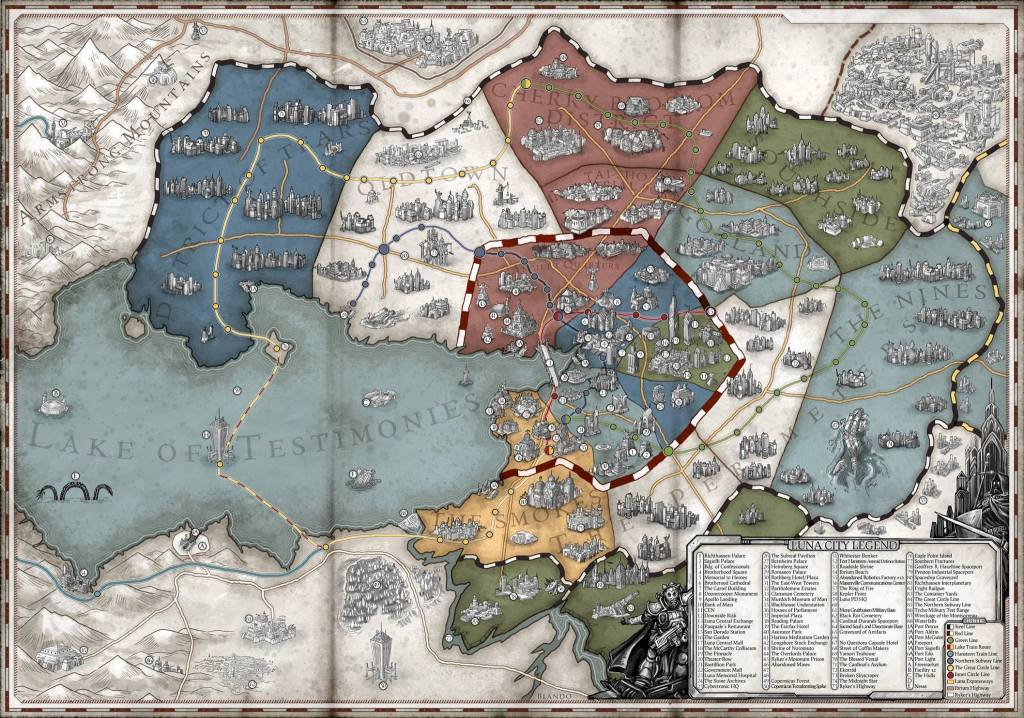
Luna to księżyc Ziemi, stanowi centrum kulturowe i gospodarcze ludzkich światów. Był to pierwszy świat, który został terraformowany (przez Capitol), dzięki czemu na jego powierzchni panuje zdatna do oddychania atmosfera i ziemska grawitacja, choć większość jego powierzchni jest nadal jałowa, szara i pokryta mułem. Prawie cała cywilizacja na Księżycu skupia się w jednym rozległym obszarze miejskim znanym jako Luna City, zarządzanym przez Bractwo, ale otwartym dla wszystkich megakorporacji i korporacji niezależnych. Luna jest podzielona na kilka sektorów, z których niektóre są zdominowane przez różne megakorporacje i korporacje niezależne, a niektóre przez Bractwo lub Kartel. Można tu spotkać wszelkie style architektoniczne, zarówno stare jak i nowe, charakterystyczne dla wszystkich głównych potęg Układu Słonecznego. Jednak największym budynkiem ze wszystkich jest Katedra Luny, pierwsza i najważniejsza ze wszystkich Katedr zbudowanych w całym Układzie Słonecznym.
Starożytne Dzielnice
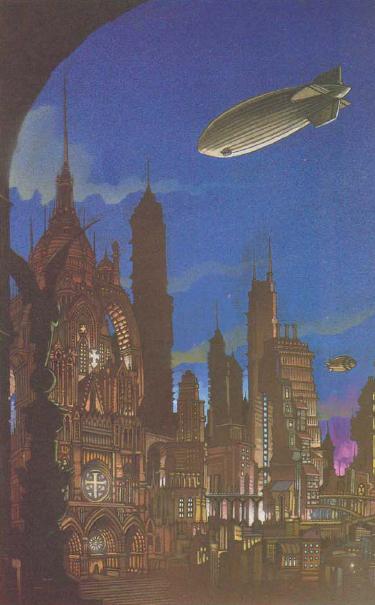
Jak w większości miast, bogatsze części Luny koncentrują się w starszych dzielnicach. Im dalej pod powierzchnię, tym bardziej nędzne stawało się otoczenie. Centralne części Luny zostały zaprojektowane przez nową kadrę architektów – nowych romantyków. Powrócili oni do starszych wartości i stworzyli pomnik utraconych czasów. Architektura jest masywna, a budynki, które tworzą tę starszą część Luny, są ogromnymi behemotami z czarnego marmuru, kamienia, stali i szkła. Ich wysokość jest różna. Najwyższe wieżowce konkurują z katedrami, sięgając setek metrów ku niebu.
Skupione wokół Wieży – ogromnej Pierwszej Katedry Bractwa i domu Kardynała – miasto rozrasta się we wszystkich kierunkach. Wieża jest najwyższym budynkiem, sięgającym nieba niczym ogromna iglica o wysokości kilkuset metrów.
Wokół katedry swoje domy ulokowały megakorporacje. Pełno tu biur i ośrodków badawczych, a także wysokiej klasy centrów handlowych i luksusowych pałaców rozrywki. Tutejsze tereny znajdują się pod całkowitą kontrolą korporacji, a ochrona i nadzór są bardzo rygorystyczne.
Obrzeża

Obszar pomiędzy starszymi częściami miasta a strefami przemysłowymi wzdłuż jego obrzeży skupia największą liczbę mieszkańców. Ludzie mieszkają tutaj i pracują dla mniejszych firm freelancerskich oraz w strefach przemysłowych i portach, starając się przetrwać nie szukając kłopotów. Budynki i mieszkania są w większości małe i niewygodne, a wiele osób śpi na ulicach. Ten ponury schemat jest od czasu do czasu przełamywany przez wspaniałe parki i sztuczne jeziora lub modne dzielnice willowe dla tych nielicznych, którzy mogą sobie pozwolić na ucieczkę od mroku ulic.
Ale można tu również znaleźć zacienione części ludzkiej cywilizacji. Kluby nocne i bary są odwiedzane przez przestępców i ludzi, którzy chcą działać bez przyciągania zbytniej uwagi. Rozrywki wszelkiego rodzaju można znaleźć zarówno na ulicach, jak i wewnątrz zniszczonych murów.
Jest to również obszar bezprawia. Niepisane zasady rządzą większością tego, co się tu dzieje, a Kartel pozostawia ten obszar samemu sobie. Tylko w przypadku poważnych zamieszek lub buntów megakorporacje lub Bractwo sprowadzają własne siły wojskowe, by stłumić niepokoje.
Życie na Obrzeżach jest surowe i bezlitosne. Tutaj miasto jest ciemniejsze i zimniejsze, spowite parą z nieszczelnych rur i rzężących maszyn. Niebieskie światło ulicznych latarni rzuca zniekształcone cienie na ściany, a ludzie przemykają jak duchy między łukami i wąskimi alejkami. Cały ten harmider jest co jakiś czas zagłuszany warkotem ciężkich silników pojazdów spalinowych.
Kompleksy Przemysłowe
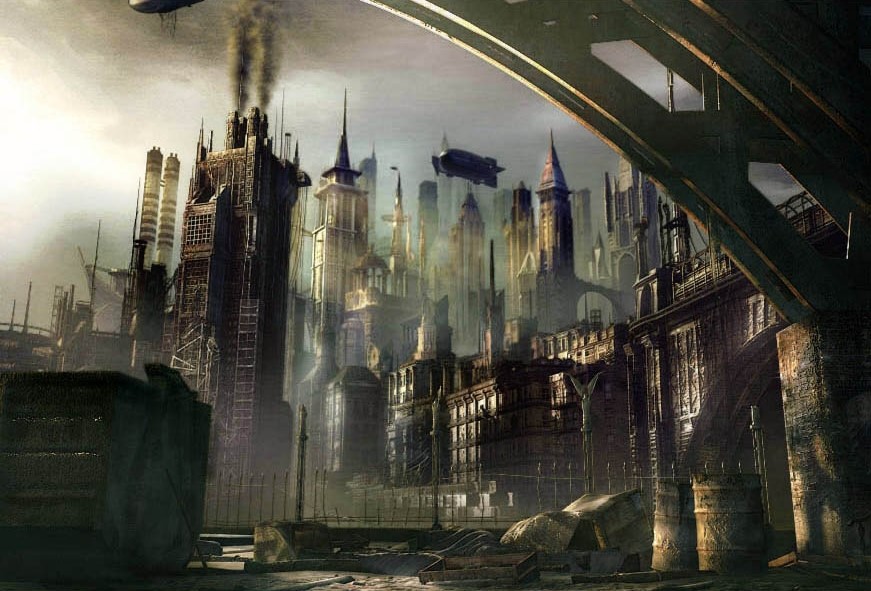
Na południowy wschód od miasta i w pobliżu portów znajdują się rozległe kompleksy przemysłowe. To skupisko przemysłu ciężkiego nie ma sobie równych na całym świecie. Ciągnący się kilometr za kilometrem obszar jest większy niż większość innych miast. Rywalizuje z nim tylko przemysłowa potęga Marsa.
Reprezentowane są tu wszystkie rodzaje przemysłu, a pomimo zaawansowanej technologii dostępnej obecnie, większość prac nadal wykonywana jest przez ludzką siłę roboczą. Praca jest ciężka i brudna, a wynagrodzenie niskie, ale potrzeba pieniędzy sprawia, że pula miejsc pracy cały czas jest pełna.
Żądza zysku megakorporacji zapewnia funkcjonowanie tych gałęzi przemysłu przez całą dobę. W tunelach pod powierzchnią ziemi silniki wysokoprężne i parowe łączą strefy przemysłowe z portami. Tam gigantyczne transporty nieustannie wysyłają nowo wyprodukowane towary do wszystkich zakątków naszego systemu. Silne zanieczyszczenie i ciągły hałas maszyn sprawiają, że praca w tym obszarze jest piekłem.
Mimo to ludzie żyją wśród dymu i rozpaczy. Niektórzy pracownicy nigdy nie opuszczają swoich stanowisk i odpoczywają tylko między zmianami, nieliczni cieszą się swoją pracą, a większość marzy o innym świecie, innym życiu, może w świecie finansów, może w wojsku, może po drugiej stronie prawa, a nawet w objęciach Mrocznej Harmonii. Tylko marzenie o czymś lepszym i wiara w Bractwo powstrzymują mieszkańców obszarów przemysłowych przed popadnięciem w całkowitą rozpacz.
Główne porty Luny można znaleźć w bardziej odległych częściach miasta. Kilka starszych i opuszczonych portów istnieje w samym mieście, ale są one rzadko używane, z wyjątkiem przemytników lub ludzi, których nie stać na koszty w większych portach.
Brudne i stale budowane i naprawiane obszary portowe to ogromne kompleksy przeznaczone do przylotów i odlotów statków, które poruszają się między planetami. Wszystkie porty posiadają urządzenia do konserwacji i naprawy statków i są pilnie strzeżone.
Większość portów należy do różnych megakorporacji. Kilka portów jest niezależnych i zarządzanych przez niezależne firmy i przedsiębiorstwa. Porty te nie są tak szczelnie strzeżone, ale nadal mają spore siły strażników i najemników, aby zapobiec jakimkolwiek kłopotom. Są one często wykorzystywane przez przemytników i nielegalnych imigrantów, aby dostać się na Lunę bez konieczności przechodzenia przez normalne kanały komunikacji, a także zapewniają drogi ucieczki dla tych, którzy narobili sobie wrogów w Bractwie lub w megakorporacjach.
Większość portów jest również samowystarczalna, aby zapobiec wyłączeniu w przypadku problemów w innych obszarach Luny – lub gdziekolwiek indziej w naszym układzie słonecznym. Osady górnicze znajdują się pod ziemią, aby zapewnić ochronę przed meteorytami, które kiedyś uderzały w powierzchnię. Większa część tego OGROMNEGO systemu kopalń i osiedli nadal istnieje; część z nich została wykorzystana do budowy linii metra, niektóre szyby zostały wykorzystane jako wysypiska śmieci, inne jako kanały ściekowe lub tunele wentylacyjne, a tysiące wejść zostało zamkniętych.
Tym niemniej większość starych kopalń wciąż tam jest, pusta lub zapewnia schronienie bezdomnym.

Luna City Courier

Luna
Diameter: 3,475 km
Mean Distance from Sun: 150,000,000 km
Day Length: 27.3 days
Orbital Period from Sun in Earth Days: 365.25 days
Mean Distance from Earth: 384,400 km
Major Cities: Luna City
Places of Note: The First Cathedral, The Stone Archives, The Black-House Underground Station, The Overlords Residence, The Pinnacle, Cardinal Durand’s Tomb, The Twin Towers, The Reading Palace, Imperial Plaza, The Luna City Capitol Eagle Hotel, The Imperial Grand, The Cartel Building, Cybertronic HQ, Downtown Shopping Area
Luna is Earth’s moon, and it is the cultural and economic center of the human worlds. It was the first world to be terraformed (by Capitol), such that, on its surface, it has a breathable atmosphere and Earth-like gravity, though much of its surface is still barren, grey, and covered in silt. Most all civilization on the moon is concentrated in a single urban sprawl known as Luna City, governed by the Brotherhood, but open to all of the megacorporations and freelance agencies. It is divided into several sectors, some dominated by different megacorporations and freelance corporations, some by the Brotherhood or the Cartel. The architecture styles, old and new, of all the major powers can be found here, but the largest building of all is the Luna Cathedral, the first and most important of all the Cathedrals built throughout the solar system.
The Ancient Quarters
As in most cities, the richer parts of Luna concentrated in the older areas. The further under surface you go, the more wretched the surroundings become. The central parts of Luna were designed by a new cadre of architects, the new romantics. They returned to older values and created a monument to lost times. The architecture is massive and the buildings that make up this older part of Luna are huge behemoths of black marble, stone, steel and glass. Their heights vary. The highest sky-scrapers compete with the Cathedrals, stretching hundreds of meters into the skies.
Centered around the Tower-the enormous First Cathedral of the Brotherhood and the home of the Cardinal-the city spreads out like a disease. The Tower is the highest building, reaching towards the sky like an enormous spire, several hundred meters high.
Around the Cathedral the megacorporations have made their homes. Offices and research facilities abound, as do high-class shopping centers and luxury entertainment palaces. The areas here are totally under corporate control and the security and surveillance is heavy.
The Perimeters
The area between the older parts and the industrial zones along the city’s edge contain the largest portion of inhabitants. People live here and work for minor freelancing firms and at the industrial areas and the ports, trying to get by without trouble. Out here, the buildings and apartments are mostly small and uncomfortable and many people sleep on the streets. The dismal pattern is occasionally broken by magnificent parks and artificial lakes, or by fashionable villa areas for those few who can afford to escape the gloom of the streets.
But here can also be found the shady parts of human civilization. The nightclubs and bars are frequented by criminals and people who want to operate without attracting too much attention. Entertainment of all kinds can be found, both on the streets and inside the worn walls.
It is also a lawless area. Unwritten rules govern much of what happens here and the Cartel leaves the area to govern itself. Only in cases of major riots or insurrections do the megacorporations or the Brotherhood bring in their own military forces to quell the disturbances.
Life in the Perimeters is harsh and unforgiving. Here, the city is darker and colder, shrouded in steam from leaking pipes and coughing machines. The blue light of the street gaslights throws distorted shadows across the walls and people flutter like ghosts between the archways and narrow alleyways. Wheezing vehicles make their way through the confusion, their heavy engines grinding and hacking.
The Industries
Southeast of the city and close to the ports lie vast industrial complexes. This concentration of heavy industry has no equal in the world. Stretching on for kilometer after kilometer, this area is larger than most other cities. It is rivaled only by the industrial might of Mars.
All different types of industries are represented, and in spite of the advanced technology available today, most work is still carried out by a human labor force. The jobs are hard and dirty and pay is poor but the need for money keeps the work pool filled.
The demands for profit by the megacorporations ensure the running of these industries around the clock. In the tunnels under the surface, diesel and steamengines connect the industrial zones to the ports. There the gigantic transports are constantly shipping newly manufactured goods to the corners of our system. The heavy pollution and the constant din of the machines makes this area hell to work in.
And even so people are living amidst the smoke and despair. Some workers never leave their posts and only rest between shifts, Few enjoy their work and most people dream of another world, another life, maybe in the financial world, maybe in the military, maybe on the other side of the law, or even in the embrace of the Dark symmetry. Only dream of something better and faith in the Brotherhood keep the citizens of the industrial areas from falling into total despair.
The major ports of Luna can be found in the more remote parts of the city. A few older and derelict ports, exist within the city itself, but these are seldom used except by smugglers or people who can’t afford the costs at the larger ports.
Dirty and under constant construction and repair, the port areas are huge complexes dedicated to the arrival and departure of the ships that traffic between the planets. All ports have the facilities to maintain and repair ships and guard them fiercely.
Most ports belong to the different megacorporations. A few of the ports are independent and run by freelancing firms and companies. These ports are not as tightly secured but still have a sizable force of guards and mercenaries to prevent any trouble. They are often used by smugglers and illegal immigrants to gain entry to Luna without having to pass through the normal channels as well as providing escape routes for those who have made enemies within the Brotherhood or the megacorporations.
The majority of the ports are also self-sufficient, to prevent shutdown in case of problems in other areas of Luna -or anywhere else in our solar-system. Mining settlements are situated under ground, to provide protection against the meteorites that once pounded the surface. The major part of this ENORMOUS system of mines and settlements is still there; some of it has been used for the Underground lines, some shafts have been used as dumps, others as sewers or ventilation tunnels, and thousands and thousands of entrances have been plugged.
But most of the old mines are still there, empty or providing shelter for the homeless.

 Luna City Courier