

Luna City Courier

Bauhaus
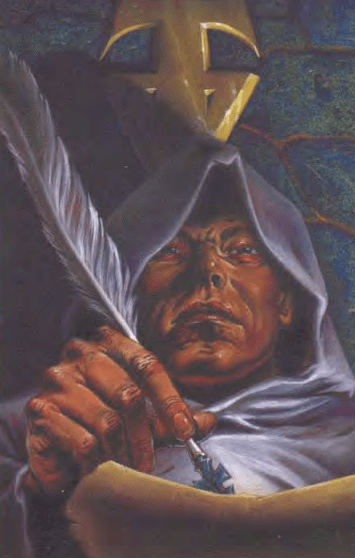
Wkrótce stało się jasne, że czterej Książęta Elektorzy korporacyjnego imperium Bauhausu nie zamierzają pozostać jedynie biernymi obserwatorami nowych konfliktów. Dzięki determinacji i wytrwałości, wynikającej z wieloletniej dyscypliny wojskowej, kierownictwo Bauhausu zgłosiło swoje roszczenia do planety z wizji kardynała Totha – świętej planety Wenus.
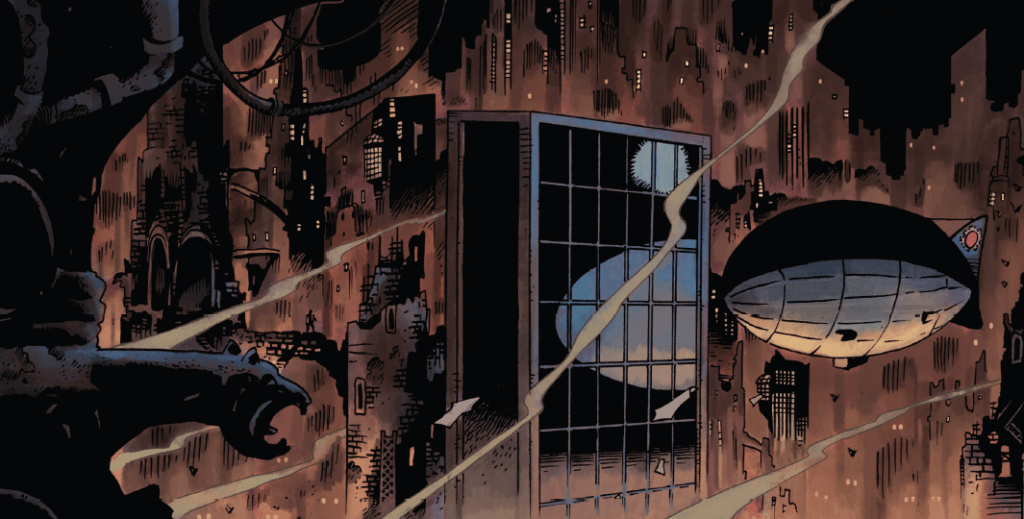
Wycinając potężne dżungle, budowniczowie Bauhausu powtórzyli na Wenus to czego pionierzy Capitol dokonali niegdyś na Marsie. Tam założyli twierdzę Heimburg jako dowód ambicji Bauhausu, by zasłużyć na miano megakorporacji.
W obliczu nowej sytuacji, kuźnie Bauhausu zaczęły produkować wyroby o jakości niespotykanej od wieków. Produkty opatrzone symbolem dwunasto zębnego koła (symbolem czterech książąt elektorów i ich doradców) stały się ikoną nowego sposobu myślenia i brawurowej filozofii. Znak jakości Bauhausu był niekwestionowany wszędzie, gdzie się pojawiał. Strategia dostarczania światom ludzkim najlepszych dostępnych towarów stała się nieodłączną cechą Bauhausu.
Jednak nawet do szlachetnej i nieskalanej arystokracji Bauhausu zdołała wtargnąć Ciemność. Coraz częściej potrzebna była moc naszych inkwizytorów, a w świętych dżunglach Wenus nasze połączone siły stoczyły potężną walkę z mrocznymi najeźdźcami z Nerona. I tak oto wciąż toczą tę niekończącą się wojnę pełną smutku i cierpienia.
— Ósma kronika, Megakorporacje i Kartel, autor: Lucretius Marcellianus
KSIĄŻĘTA ELEKTORZY
DOŚWIADCZENIE JEST NASZYM DZIEDZICTWEM
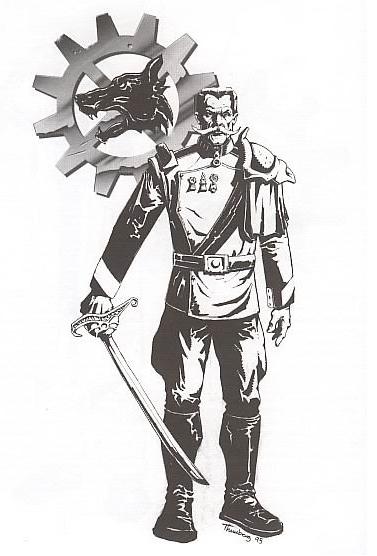
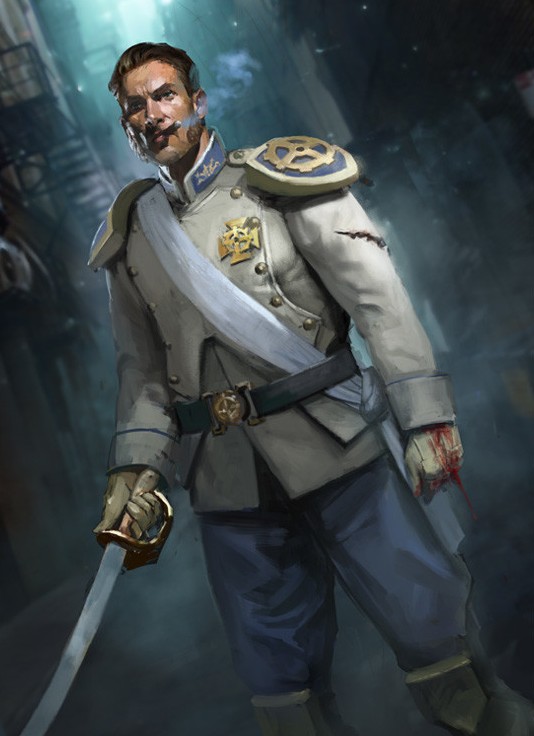
Hierarchia Bauhausu opiera się na czterech starożytnych rodzinach Książąt Elektorów, którzy niegdyś byli jedynie wybitnymi doradcami wojskowymi kierownictwa korporacji, a obecnie sprawują całkowitą kontrolę nad wszystkimi sprawami Bauhausu. Każda z nich ponosi całkowitą odpowiedzialność za jeden dział w ramach korporacji. Ze względu na nieprzerwaną linię wojskową w czterech rodzinach książąt elektorów, wojsko nadal zajmuje bardzo silną pozycję w korporacji, a tylko oficerowie mogą piastować wysokie stanowiska. Jednak urzędnik z doświadczeniem cywilnym jest szybko awansowany do stopnia pułkownika sztabowego lub równoważnego, jeśli okaże się wystarczająco wartościowy dla korporacji. Złote mundury wojskowe i ceremonialne miecze są zatem powszechnym elementem wystroju sal konferencyjnych imperium biznesowego Bauhausu.
KOŁO ZĘBATE BAUHAUSU
Cztery rodziny Książąt Elektorów mają swoje korzenie w czasach znacznie wcześniejszych niż podbój kosmosu i stopniowo awansowały z Korytarzy Doradców do Sal Dyrektorów. Rodziny te i ich zakresy kompetencji są następujące:
ROMANOV – KOMANDOR ARMII
Generał sztabu Constance Romanov jest najwyższym dowódcą połączonych sił zbrojnych Bauhausu.
RICHTHAUSEN – DYREKTOR DS. PRZEMYSŁU
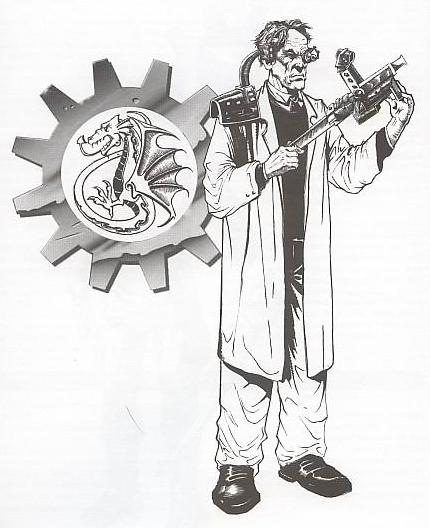
Rodzina Richthausenów jest najstarszą ze wszystkich czterech, a jej głowa, wielki admirał Stanisław Richthausen, odpowiada za przemysł oraz to, co można nazwać „gospodarką”.
BERNHEIM, SŁUGA LUDU
Marszałek polowy Enzo Bernheim jest odpowiedzialny za dobrobyt pracowników Bauhausu, w tym za obszar „usług socjalnych”.
SAGLIELLI, OBROŃCA WIARY
Wytrwały i pełniący ważne obowiązki, najwyższy marszałek lotnictwa Vittorio Saglielli odpowiada za bezpieczeństwo wewnętrzne, działania przeciwko Legionowi oraz sprawiedliwość w Bauhausie.


Wspólnie tworzą cztery ramiona koła zębatego Bauhausu, otoczeni przez swoich doradców po prawej stronie i przez następców tronu po stronie lewej. I jak zawsze w organizacji Bauhausu, Bractwo zajmuje centralną pozycję jako doradcy i audytorzy, tutaj z Inkwizytorem Primusem w centrum koła.
STRATEGIA BIZNESOWA
RZEMIOSŁO JEST WSZYSTKIM,
KOSZT NIE MA ZNACZENIA
Bauhaus zawsze był synonimem jakości. Jest to celowa polityka, która ma dwa cele: po pierwsze, zapewnienie własnym pracownikom tego, co najlepsze, a po drugie, możliwość konkurowania z innymi niezależnie od rodzaju produktu i rynku. Ponieważ Bauhaus nieustannie dąży do osiągnięcia doskonałości, wymagania wobec projektantów i pracowników są wysokie. Tylko zatwierdzone produkty mogą opuścić fabryki. Wyniki działalności każdego zakładu Bauhausu są zawsze konkurencyjne w stosunku do najlepszych produktów innych korporacji. Jednak wadą takiej jakości jest cena. Produkty Bauhaus są często postrzegane jako niedostępny luksus. Aby zapewnić przystępne cenowo alternatywy, Bauhaus dostarcza do sklepów tanie zamienniki, które noszą znaki towarowe inne niż logo Bauhausu. Podobnie jak w przypadku innych megakorporacji, strategia rynkowa Bauhausu opiera się na produkcji wszystkiego, co zmniejsza ryzyko zbytniego uzależnienia od zysków z jednego produktu. Dlatego imperium korporacyjne obejmuje prawie każdy rodzaj działalności, od rafinerii ropy naftowej, pól gazowych i kopalń miedzi po studia projektowe haute couture, szpitale, piekarnie, korporacje finansowe i sieci fast foodów.Jeśli mielibyśmy wskazać jedną gałąź przemysłu Bauhausu, która stanowi dumę korporacji, byłby to przemysł ciężki – produkcja ciężkich pojazdów budowlanych, maszyn górniczych, stalowych dźwigarów do budowy drapaczy chmur i tym podobne.
ODZNACZENIA
Najbardziej prestiżowym odznaczeniem w społeczeństwie Bauhausu jest Najwyższy Order Zasługi Szpitalników Wenus, zwany po prostu Najwyższym Orderem. Warunkiem członkostwa jest posiadanie stopnia generała lub admirała, miesięczny dochód w wysokości 250 000 koron oraz rekomendacja co najmniej dwóch członków zarządu zakonnego.
Innym znanym odznaczeniem za zasługi jest Order Naramiennika, którego członkowie noszą na lewym ramieniu naramiennik ze stali chromowanej. Chociaż członkami Orderu Naramiennika są głównie oficerowie wojskowi, do laureatów włączono również wybitnych naukowców i dyplomatów.
Zakon Oxia Palus jest tajnym stowarzyszeniem zajmującym się „działaniami prewencyjnymi” przeciwko Legionowi Ciemności. Podobno wielu inkwizytorów i mistyków jest w jego szeregach, a zakon ma raczej złą reputację ze względu na swoje krwawe metody.
STOPNIE WOJSKOWE BAUHAUSU
SIŁY LĄDOWE
– Szeregowy/Dragon/Huzar
– Chorąży
– Sierżant
– Porucznik
– Kapitan
– Major
– Pułkownik
– Generał
– Marszałek
SIŁY POWIETRZNE
– Pilot
– Chorąży Eskadry
– Sierżant Eskadry
– Podporucznik
– Porucznik
– Kapitan
– Komandor
– Admirał
– Marszałek Lotnictwa
BAUHAUSERZY
DUMA I OCHRONA
W Bauhausie, bardziej niż w jakiejkolwiek innej korporacji, istnieje stereotypowy „przeciętny Kowalski”, czyli „Bauhauser”. Poziom wykształcenia, zamożności i wpływów jest dość wyrównany we wszystkich warstwach społecznych, co znajduje odzwierciedlenie w dość egalitarnym sposobie myślenia. Przeciętni pracownicy Bauhausu pracują w przemyśle jako inżynierowie, operatorzy lub monterzy. Lubią swoją pracę, ponieważ czują, że to, co robią, jest ważne dla korporacji, a w szerszym sensie także dla Bractwa. Ponadto Bauhauser zarabia całkiem niezłą pensję, która wystarcza na utrzymanie rodziny z dwójką dzieci we własnym mieszkaniu. Chociaż przeciętny Bauhauser ma za sobą mniej więcej 8 lat nauki w szkole, to nie wie zbyt wiele o innych megakorporacjach, a nawet i o swojej własnej. Większość systemu edukacyjnego Bauhausu ma na celu przekazanie uczniom wiedzy technicznej. Czasami słyszą w wiadomościach, że Bauhaus odniósł gdzieś wielki sukces militarny, ale nie ma to dla nich większego znaczenia. Są zadowoleni z życia w mieście, o ile nie muszą radzić sobie z życiem na ulicy. W świadomości przeciętnych obywateli, Bauhaus oznacza bezpieczeństwo i ochronę przed wszystkim, co może się wydarzyć: wypadkami, chorobami, inwazjami obcych. Są dumni z tego, że należą do najlepszego społeczeństwa.
MAŁE KOŁECZKO W
MECHANIZMIE BAUHAUSU
WOJSKO
TRADYCJA I DYSCYPLINA
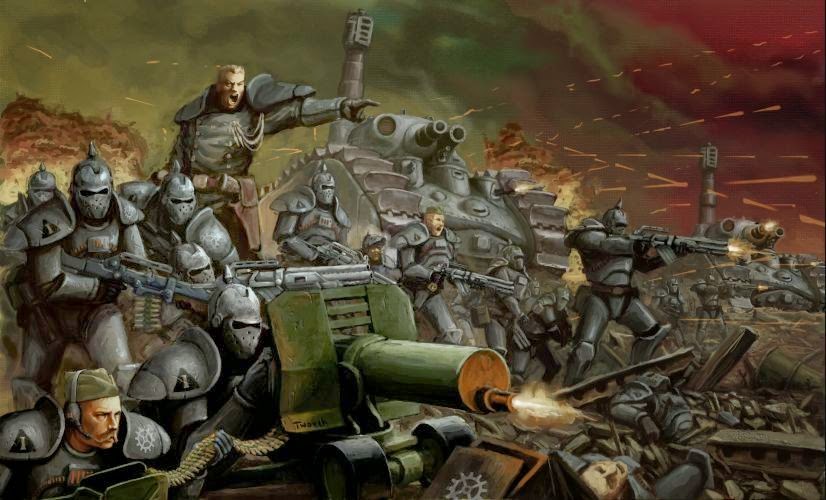
Siły zbrojne Bauhausu cieszą się zasłużoną reputacją dobrze uzbrojonych i wyszkolonych. Bauhaus rekompensuje brak siły ognia i liczebności wysoką wszechstronnością i stopniem opancerzenia. Siły pancerne, pułki dragonów, są najbardziej szanowane spośród wszystkich sił Bauhausu. Zostanie oficerem dragonów jest uważane za jeden z największych zaszczytów dla każdego żołnierza Bauhausu. Wyposażenie jest oczywiście bardzo wysokiej jakości, choć nie jest szczególnie potężne. Zamiast mocy, broń i pancerze są zoptymalizowane pod kątem połączenia największej mobilności z największą możliwą skutecznością. ale i tu ponownie – cena i możliwości produkcyjne ograniczają ilość broni, którą można wyprodukować. Wysoki status kariery wojskowej kusi rzesze młodych Bauhauserów do wstąpienia do wojska, ale ilość materiałów nigdy nie wystarcza, aby wszyscy rekruci mogli pełnić służbę.
ORGANIZACJA
Siły zbrojne, podlegające jurysdykcji Księcia Elektora Romanowa, są podzielone na cztery rodzaje służb:
– Siły pancerne (dragoni)
– Piechota (huzarzy)
– Kawaleria powietrzna
– Siły Specjalne
Szczególnie utalentowani żołnierze mogą uczęszczać do akademii wojskowej, aby zostać podoficerami, ale w większości przypadków są oni wybierani spośród szlachty. Wszyscy oficerowie mają w pewnym sensie przywództwo we krwi, ale dopiero po kilku latach spędzonych w wyznaczonej przez jednostkę akademii biorą udział w prawdziwej walce. Honor jest bardzo ważny w siłach zbrojnych Bauhausu, zwłaszcza wśród oficerów. Bardzo rzadko zdarzają się problemy dyscyplinarne w kontaktach z innymi korporacjami, respektowane są konwencje, zawieszenie broni jest zazwyczaj przestrzegane, a ranni z obu stron są dobrze traktowani po bitwie.
SIŁY PANCERNE
„Dragoni” Bauhausu stanowią trzon sił zbrojnych. Pierwotnie zorganizowani do walki w otwartym terenie, dostosowali się do współczesnego głównego teatru działań wojennych, jakim są dżungle Wenus, głównie poprzez przeprojektowanie wozów bojowych, ale także poprzez wdrożenie nowych taktyk i organizacji.
PIECHOTA
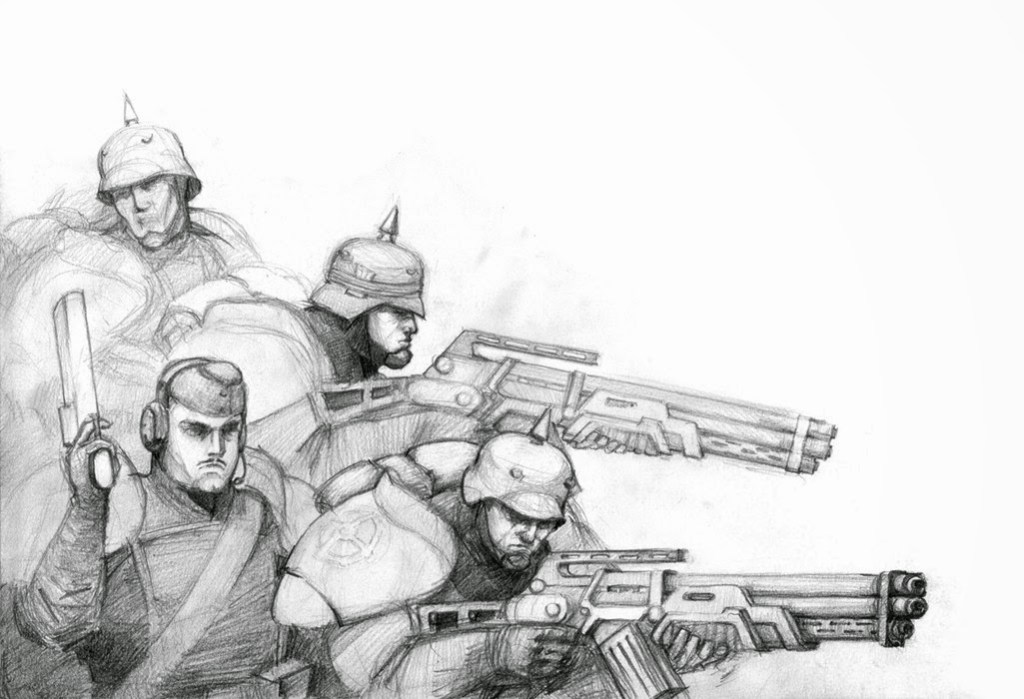
„Huzarzy” to nazwa nadana bardziej konwencjonalnym siłom lądowym. Dysponują oni lżejszym wyposażeniem i mają mniejsze doświadczenie, ale stanowią godnych przeciwników dla każdej regularnej jednostki dowolnej innej korporacji.
KAWALERIA POWIETRZNA
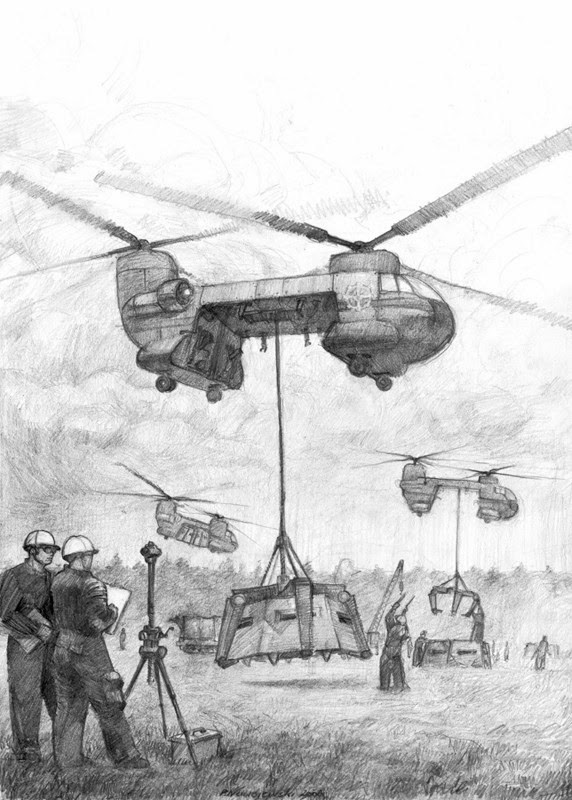
Kawaleria powietrzna zapewnia niezbędne wsparcie podczas operacji, a także transport lotniczy. Ta niewielka i kosztowna organizacja wyposażona jest głównie w duże, silnie opancerzone helikoptery.
SIŁY SPECJALNE
Podobnie jak Imperial, Bauhaus może pochwalić się posiadaniem najlepszych sił specjalnych w systemie, nie brakuje im niczego, jeśli chodzi o wyposażenie, szkolenie czy wsparcie. Składają się one z najlepszych żołnierzy z zwyczajnych jednostek elitarnych. W całym Bauhausie uznaniem cieszą się „Blitzerzy Bauhausu”, legendarna jednostka przeciwpancerna wykorzystywana do „misji niemożliwych” przeciwko innym siłom pancernym; „Etoiles Mortant” – Umierające Gwiazdy, posiadające specjalne przeszkolenie i wyposażenie do walki z siłami Legionu Ciemności; oraz oczywiście „Wenusjańscy Zwiadowcy”, których nazwa mówi sama za siebie.
RENOMA JEST
NASZĄ NAGRODĄ
HEIMBURG I WENUS
DOM NADZIEI
Wenus jest najważniejszą twierdzą Bauhausu w wewnętrznych częściach Układu Słonecznego. Tam, na północnej półkuli, znajduje się stolica Bauhausu, Heimburg. Ponad jedna trzecia powierzchni planety pokryta jest gęstą, nieprzyjazną dżunglą, podczas gdy półkula południowa częściowo znajduje się pod oceanem płytkiego błota. W kierunku biegunów i równika dżungla staje się coraz rzadsza i stopniowo przechodzi w płaskie stepy. Dżungla poprzecinana jest wszędzie wolno płynącymi, płytkimi rzekami, których brudna woda przenosi niemal wszystkie znane choroby.
HEIMBURG
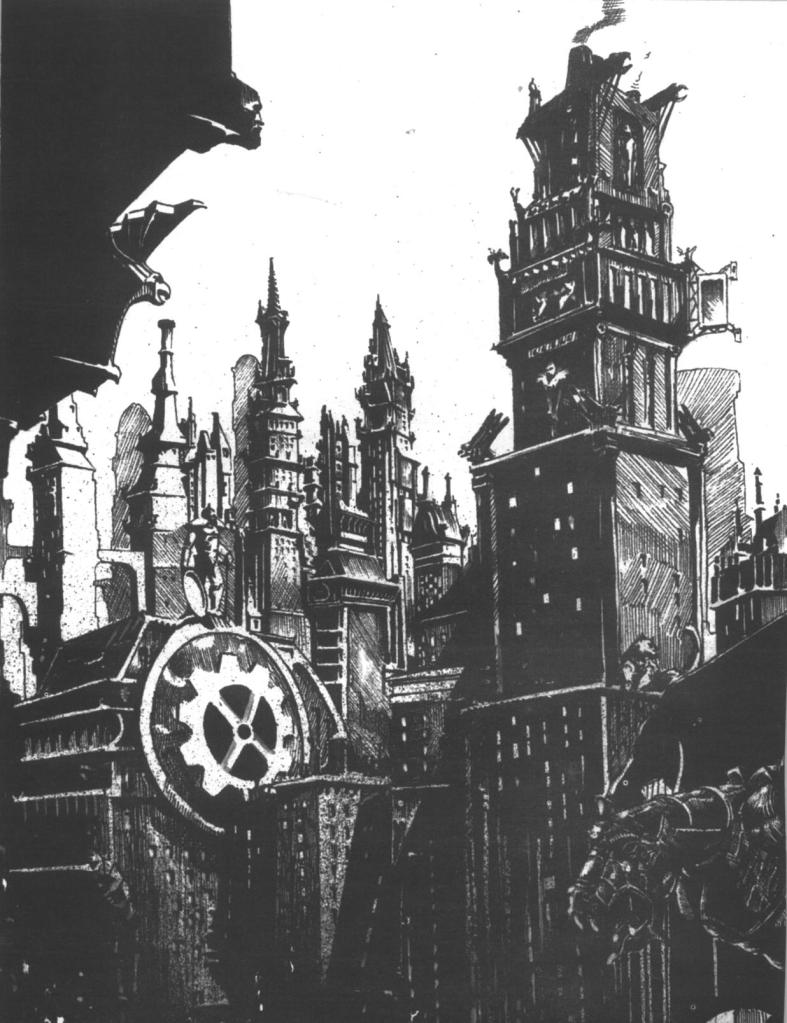
Heimburg wyraźnie kontrastuje na tle dżungli, wznosząc się wysoko ponad korony drzew, a jego najwyższe wieżowce pną się na setki metrów ku błękitnemu niebu. Heimburg jest czystym miastem, przynajmniej w dzielnicach korporacyjnych. Na obrzeżach i przedmieściach jest tak samo brudny jak każda inna megametropolia. Architektura jest solidna i imponująca, tworząc rozległe, czarne cienie w wąskich uliczkach i obłe sylwetki wspaniałych bulwarów wiodących do pomników bohaterów, o których nie wolno zapomnieć. Heimburg charakteryzuje się dzielnicami korporacyjnymi w Bauhauserskim stylu, ale tylko około 10% wszystkich mieszkańców należy do szlachty Bauhausu. Reszta to liczna klasa niższa Bauhausu, wolni strzelcy, ich pracownicy, awanturnicy, szpiedzy i pracownicy innych megakorporacji (z których Imperial jest najliczniejszy w Heimburgu). Jest to tętniące życiem i energią miasto, słynące z nieustannego optymizmu.
STREFY WALKI
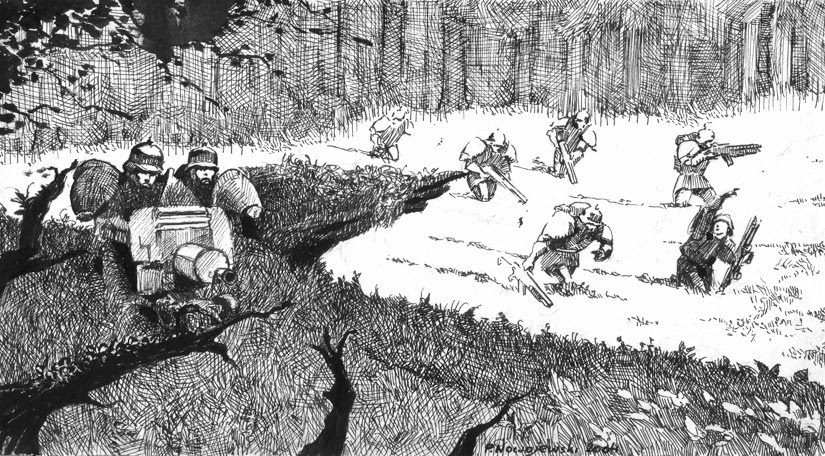
Na całej powierzchni Wenus toczą się niezliczone potyczki, które niekiedy przeradzają się w wyniszczające bitwy, czasem między innymi korporacjami, ale głównie jednak przeciwko Legionowi Ciemności. Walka z Imperialem jest najtrudniejsza i najsmutniejsza, to ciągły spór o ziemię i zasoby. Krwawe Berety i inne oddziały specjalne Imperialu, niczym szakale ścigają siły Bauhausu, które są wyczerpane walkami z Legionem Ciemności. Na powierzchni planety Legion Ciemności wzniósł liczne cytadele, otoczone okopami i posterunkami strażniczymi Bauhausu. Aktywność wokół cytadel jest bardzo zróżnicowana, od otwartej wojny po nerwową obserwację.
W CZASACH POKOJU
SZYKUJ SIĘ DO WOJNY
KONKURENCI
PODAJ RĘKĘ
TYM, KTÓRYM UFASZ
Bauhaus jest postrzegany jako trudny, ale uczciwy partner biznesowy, zawsze niezawodny po zawarciu umowy, ale trudny do nawiązania współpracy. W związku z tym stosunki finansowe i dyplomatyczne między Bauhausem a innymi korporacjami są dobre. Niemniej jednak Bauhaus znany jest z powolnego podejmowania decyzji, ze względu na swoją skrupulatną dbałość o wszystkie szczegóły. To wymaganie dokładności jest często mylone ze snobizmem, co psuje reputację negocjatorom Bauhausu.
KARTEL
PROFESJONALIZM
I DOSKONAŁOŚĆ
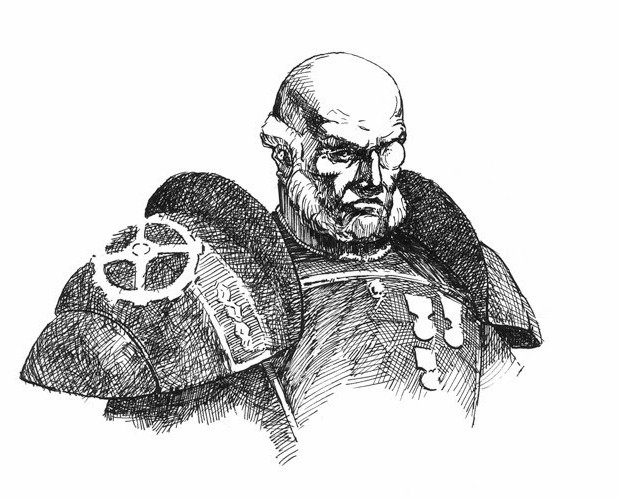
Relacje Bauhausu z innymi megakorporacjami nie znajdują odzwierciedlenia w Kartelu, który w oczach Bauhausu jest wyraźnie nietrafiony. Dlatego też urzędnicy są wysyłani do gigantycznej organizacji Kartelu jako stażyści, aby obserwować i uczyć się sztuki dyplomacji, ale nie mają oni uprawnień do podejmowania żadnych działań. Innym, bardziej namacalnym problemem jest to, że ukryty konflikt między czterema Książętami Elektorami znacznie osłabia Bauhaus podczas mianowania negocjatorów do Wysokiej Rady Kartelu. Zamiast zwracać się do Kartelu, Bauhaus często apeluje do Bractwa o rozwiązanie konfliktów, które normalnie znalazłyby się w porządku obrad Kartelu. Mimo że Bauhaus czasami wzbrania się przed przekazaniem Kartelowi wyznaczonej liczby żołnierzy, Żołnierze Zagłady zawsze otrzymywali najlepszych weteranów Bauhausu.
ŚWIĘTE BRACTWO
SIŁA DUCHA
ZDROWIE UMYSŁU
Rzeczywiście, pierwszych czterech Kardynałów wywodziło się z Bauhausu, a korporacja i Książęta Elektorzy zawsze byli najsilniejszymi zwolennikami Bractwa. Obecnie jednak Książęta Elektorzy z Bauhausu są bardziej związani z Cybertronikiem, co uniemożliwia utrzymanie silnych relacji z Bractwem. Pomimo usilnych starań Książąt Elektorów, aby zerwać więzi między Bauhausem a Bractwem, osiągnęli oni cel dopiero po jakimś czasie, kiedy doszło do pierwszych poważnych konfliktów, które ostatecznie przerodziły się w otwartą wojnę na Wenus. Obecnie stosunki są ambiwalentne. Romanowowie i większość oficerów postrzegają Bractwo jako potencjalne zagrożenie, podczas gdy inne rodziny popierają popleczników Kardynała. Chociaż arystokracja jest nieco podzielona w swoim stanowisku wobec Bractwa, Kardynał ma silny wpływ na przeciętnego Bauhausera, a także na wszystko, co robi korporacja.
LEGION CIEMNOŚCI
KIEDY ZAPADA CIEMNOŚĆ
ODPAL SWOJEGO INCINERATORA
Bauhaus to korporacja, która najbardziej ucierpiała w wyniku najazdów Legionu Ciemności, a także ta, która przeznaczyła najwięcej środków na walkę zbrojną, kierując się wyłącznie instynktem samozachowawczym. Wenus jest największym i najbardziej oczywistym obszarem działań wojennych w systemie, a w tej walce poświęcono życie tysięcy młodych żołnierzy. Legionowi Ciemności i jego sługom zadawane są zaciekłe ciosy na wszystkich frontach, wszelkimi środkami i bez względu na koszty. Z punktu widzenia Bauhausu w wojnie z Legionem można poświęcić wszystko oprócz honoru i ludności cywilnej. Bliskie relacje korporacji z Bractwem okazały się pomocne w miastach i wśród zwykłych ludzi, ale na polu bitwy nie przyniosły większych korzyści.
BLIŹNIACZE WIEŻE
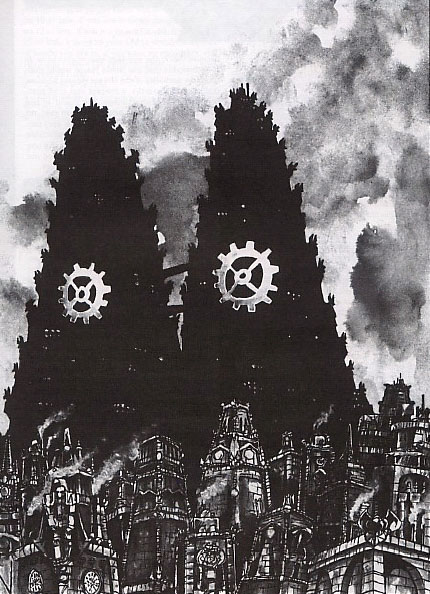
W Bliźniaczych Wieżach Bauhausu na Lunie znajdują się wszystkie centralne organy zarządzania korporacją Bauhaus, a także departamenty i ministerstwa czterech Książąt Elektorów. Najwyższe piętra zachodniej wieży (budynek jest zorientowany na południe) prawie w całości zajmuje Ministerstwo Obrony, a w niższych partiach znajdują się tak zwane „Korytarze Doradców”. Składają się one z wielu różnych departamentów i rad koordynujących działania niezależnych korporacji, działających w ramach Bauhausu. W wieży wschodniej znajdują się, od góry, sale posiedzeń Książąt Elektorów oraz Rady ds. Gospodarki, Przemysłu i Usług Społecznych. Książęta Elektorzy i inni wysocy urzędnicy mają własne windy prowadzące bezpośrednio do poziomu podziemnego, skąd prywatne tunele prowadzą bezpośrednio do ich pałaców w centrum miasta. Ochrona w wieżach bliźniaczych jest rygorystyczna, ale nie dochodzi do takich ekscesów jak w siedzibie Cybertroniku lub Pałacu Czytań Imperialu.
DUKAT HEIMBURSKI
W Bauhausie dukat jest często używany zamiast Korony Kardynalskiej. Są to monety z czystego złota i srebra, wybijane w Heimburgu, rzadko spotykane poza obszarami kontrolowanymi przez Bauhaus. Występują jako monety złote o nominałach 1000 i 500 dukatów oraz jako monety srebrne o nominałach 100, 20, 5 i 1 dukat. 1 dukat jest oficjalnie równy 1 koronie kardynalskiej, ale w rzeczywistości nie ma żadnej wartości na Marsie i Merkurym.
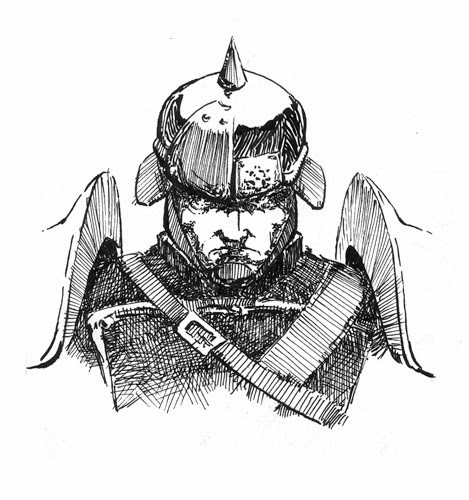
JEDNOSTKI ORGANÓW ŚCIGANIA W BAUHAUSIE
BLEU, czy też „Niebiescy”, jak się ich powszechnie nazywa, to jedyna siła policyjna w Bauhausie, znana z niezwykłej skuteczności i szybkości działania. Niebiescy skupiają się bardziej na zapobieganiu przestępstwom niż na egzekwowaniu prawa i prawie niemożliwe jest poruszanie się po obszarze kontrolowanym przez Bauhaus bez natrafiania co pięć minut na pary patrolujących pieszo Niebieskich. Funkcjonariusze policji BLEU są wysocy. Minimalny wzrost wynosi 190 cm, co wyklucza wiele kobiet ze służby w terenie. Podczas patrolowania pieszo są oni zazwyczaj wyposażeni w pistolety i jeden granat z gazem łzawiącym. Pod niebiesko-czarnymi mundurami noszą lekkie kamizelki ochronne. W zachowaniu są surowi i twardzi, a gdy są obrażani lub atakowani, nie traktują swoich przeciwników zbyt delikatnie. W miastach Bauhausu co drugą przecznicę można znaleźć niewielkie posterunki policji, w których pracuje od 4 do 12 funkcjonariuszy. Każdy taki posterunek dysponuje jednym pojazdem do tłumienia zamieszek oraz sprzętem do prawdziwej walki. Oprócz tych mini-posterunków istnieje jeden główny posterunek, w którym na kilometr kwadratowy przypada około 200 funkcjonariuszy i 20 pojazdów.
VINCIANO-TRAFFAUX
Jeśli chcesz poruszać się z klasą i stylem, wybierz samochód Vinciano-Traffaux. Samochody te są mocne i zapewniają pasażerom najnowocześniejsze zabezpieczenia. Oficjalnym pojazdem przedstawicieli i urzędników Bauhausu jest ciężki kabriolet napędzany silnikiem Bauhaus-Traffaux o wielokrotnej mocy. Może osiągać prędkość do 150 mil na godzinę. W celu zapewnienia bezpieczeństwa kierowcy i pasażerów samochód jest wyposażony w ciężkie płyty pancerne, a rama jest wzmocniona wytrzymałymi stopami metali.


Luna City Courier

Bauhaus
And it soon became apparent that the four Duke Electors of the Bauhaus corporate empire wished to be more than onlookers on the new scene of struggle. With the determination and steadfastness that only generations of military discipline could produce, the Bauhaus management staked its claim on the planet in Cardinal Toth’s visions—the sacred planet of Venus.
What Capitol’s Pioneers had once done on Mars, the Bauhaus Homebuilders did on Venus by clearing the mighty jungles. There they established the stronghold of Heimburg as proof of Bauhaus’ ambition to carry the title of megacorporation.
In the light of their new position, the Bauhaus smithies began to produce quality none had seen in long ages. The products carrying the symbol of the twelve-cogged wheel (the symbol of the four Duke Electors and their advisors) became the icon for a new thinking and a bold philosophy. The Bauhaus mark of quality was unquestioned wherever it appeared. The strategy of providing the human worlds with the best goods available became inherent to Bauhaus.
But even into the honorable and undefiled nobility of Bauhaus, the Darkness managed to intrude. The power of our Inquisitors was requested more and more, and in the sacred jungles of Venus, our combined forces clashed mightily against the Dark intruders from Nero. So do they still fight in this never-ending war of grief and suffering.
— The Eighth Chronicle, The Megacorporations and the Cartel, by Lucretius Marcellianus
THE DUKE ELECTORS
EXPERIENCE IS OUR HERITAGE
The Bauhaus hierarchy is built around the four ancient families of Duke Electors, once only prominent military advisors to the corporation management, they are now in complete control of all of Bauhaus’ business. Each has total responsibility for one division within the corporation. Due to the unbroken lineage of the military within the four Duke Elector families, the military still holds a very strong position within the corporation, and only officers may hold high positions. However, an official with civilian background is quickly promoted to staff colonel or the equivalent should he or she prove valuable enough to the corporation. Gold-braced military uniforms and ceremonial swords are therefore common features in the board rooms of the Bauhaus business empire.
THE BAUHAUS COG-WHEEL
The four families of Duke Electors draw their heritage from the times long before the conquest of space, and they have gradually emerged from the Corridors of Advisors to the Halls of Directors. They and their „areas of responsibility” are:
ROMANOV, THE COMMODORE OF THE ARMY
General of Staff Constance Romanov is the supreme commander of the combined armed forces of Bauhaus.
RICHTHAUSEN, THE DIRECTOR OF INDUSTRY
The Richthausen family is the oldest of the four, and its head, Grand Admiral Stanislaw Richthausen, is in charge of industry and what might be called the «economy».
BERNHEIM, THE SERVANT OF THE POPULACE
Field Marshal Enzo Bernheim is responsible for the well-being of the Bauhaus employees, including the «social services» area.
SAGLIELLI, THE KEEPER OF THE FAITH
A tough and important duty, Supreme Air-Marshal Vittorio Saglielli is in charge of internal security, counter-Legion measures and Justice within Bauhaus.
Together they form the four spokes of the Bauhaus cogwheel, surrounded by their advisors to right and their crown-heir to the left. And as always in the Bauhaus organization, the Brotherhood holds a central position as advisors and auditors, here with an Inquisitor Primus in the center of the wheel.
BUSINESS STRATEGY
CRAFT IS ALL, COST IS NOTHING
Bauhaus has always been a trademark of quality. This is a deliberate policy with two purposes: one, to provide their own with the best, and two, to be able to compete with the others regardless of type of product and market. Because Bauhaus constantly quests for the best, the demands on designers and employees are high. Only approved products may leave the factories. The result of any Bauhaus facility is always competitive with the best of what the other corporations produce. However, the drawback to such quality is the price. Bauhaus products are often regarded as unreachable luxuries. To provide affordable alternatives, Bauhaus supplies the stores with low-cost alternatives which carry trademarks other than the Bauhaus cog. As with the other megacorporations, Bauhaus’s market strategy relies on producing everything, which lessens the risk of becoming too dependent on the profit of any one product. Therefore, the corporate empire includes just about every type of business, from crude oil refineries, gas fields and copper mines to haute couture design studios, hospitals, bakeries, finance corporations and fast-food chains. If one industrial branch in Bauhaus would be considered the corporation’s pride, it would be the heavy mechanical industry—manufacturing heavy-duty construction vehicles, mining machinery, steel girders for skyscraper construction, and so on.
ORDERS
The most respected order of Bauhaus society is the High Order of Merit of Venus’ Hospitallers, or simply the High Order. Membership requirements are either general’s or admiral’s rank, monthly income of 250,000 Crowns and that you’ve been suggested for membership by at least two members of the order’s Board. Another renowned order for deeds worthy of recognition is the Order of the Pauldron, in which the members carry a chromed steel shoulder pad on the left shoulder. Although military officers are mainly the members of Pauldron, prominent scientists and diplomats have been incorporated into the order as well. The Order of Oxia Palus is a secretive society for «preventive actions» against the Dark Legion. Many Inquisitors and Mystics are rumored to be members, and the order has a somewhat bad reputation for its bloody methods.
BAUHAUS MILITARY RANKS
GROUND FORCES
– Private/Dragoon/Hussar
– Banner Sergeant
– Sergeant
– Lieutenant
– Capitaine
– Major
– Colonel
– General
– Marshal
AIR FORCES
– Airman
– Wing Sergeant
– Flight Sergeant
– 2nd Lieutenant
– 1st Lieutenant
– Capitaine
– Commodore
– Admiral
– Air Marshal
THE BAUHAUSERS
PRIDE AND PROTECTION
In Bauhaus, more than in any other corporation, there is a stereotypical «average guy», a «Bauhauser». The level of education, wealth and influence is fairly equal in all levels of society, which reflects in a fairly egalitarian way of thinking. The average Bauhaus employees work in the industry as an engineer, operator or fitter. They enjoy their work simply because they feel that what they’re doing is important for the corporation, and in a greater sense, for the Brotherhood too. Also, a Bauhauser earns pretty good salary, which is more than enough to support a spouse and two children in their own apartment. Although they typically have had around 8 years in school, the average Bauhausers doesn’t know much about the other megacorporations or, in fact, their own. Most of Bauhaus’ educational system is intended to give its students technical expertise. They occasionally hear on the news that Bauhaus has had a great military success somewhere, but it doesn’t concern them. They are well satisfied with the city life as long as they don’t have to deal with the life on the street. In the mind of the average citizens, Bauhaus is security and protection against whatever might happen: accidents, diseases, alien invasions. They are proud to be a part of the best of societies.
A SMALL COG IN THE
BAUHAUS WHEEL
THE MILITARY
TRADITION AND DISCIPLINE
Bauhaus military forces have a deserved reputation of being well armed and trained. Bauhaus compensates for what they lack in firepower and numbers with high versatility and degree of armor. The armored forces, the dragoon regiments, are the most respected of all the Bauhaus forces. Becoming a dragoon officer is regarded as one of the greatest honors for any Bauhaus soldier. Equipment is, of course, of very high quality, though not exceptionally powerful. Instead of power, weapons and armor are optimized to combine the greatest mobility with the greatest possible effectiveness. Again, the price tag and the production capacity limit the amount of weapons which can be produced. With the high status of a military career tempting hordes of young Bauhausers to enlist, the amount of material is never enough to put all recruits in operative status.
ORGANIZATION
The armed forces, falling under the jurisdiction of Duke Elector Romanov, are divided into four service branches:
– Armored Forces (dragoons)
– Infantry (hussars)
– Air Cavalry
– Special Forces
Especially talented soldiers might attend military academy to become an NCO, but most of the time these are picked from the «nobility». All commissioned officers somehow have leadership in their blood, but only after several years in one of the unit-designated academies are they subjected to real combat. Honor is very important in Bauhaus’s armed forces, especially among officers, and there are extremely few disciplinary problems (from other corporations, that is) are treated well, cease-fires are usually respected and wounded from both sides are well taken care of after the battle.
ARMORED FORCES.
The Bauhaus «Dragoons» make up the core of the armed forces. Originally organized for battle in open terrain, they have adapted to the current main battle theater, the Venusian jungles, mainly by redesigning the battle-wagons, but also by implementing new tactics and organization.
INFANTRY
The «Hussars» is the nickname for the more conventional ground military forces. They have lighter equipment and less training, but they are a good match for any regular unit of any other corporation.
AIR CAVALRY
The air cavalry provides needed support during operations, as well as transportation for airlifts. This small and costly organization is mainly equipped with large, heavily armored helicopters.
SPECIAL FORCES
Along with Imperial, Bauhaus can boast having the best special forces in the system, lacking nothing in the way of equipment, training or support. They are composed of the best soldiers from the regular elite units. Renowned throughout Bauhaus are the «Bauhaus Blitzers», a legendary anti-armor unit used for «impossible missions» against other armored forces; the «Etoiles Mortant», the Dying Stars, endowed with special training and equipment for fighting the Dark Legion’s forces; and, of course, the «Venusian Rangers», whose name speaks for itself.
RENOWN IS
OUR REWARD
HEIMBURG AND VENUS
HOME OF HOPE
Venus is Bauhaus’ most important stronghold in the inner parts of the solar system. Bauhaus’ capital, Heimburg, is located there, in the northern hemisphere. More than a third of the planet is covered by a dense, hostile jungle, while the southern hemisphere is partially under an ocean of shallow mud. Toward the poles and the equator, the jungles lighten up and gradually change into flat steppes. The jungle is crossed everywhere by slow, shallow rivers, the dirty water of which carries just about every disease you can name.
HEIMBURG
As a sharp contrast to the jungle, Heimburg rises above the highest tiers of the trees, its highest skyscrapers stretching hundreds of meters toward the bright bluish sky. Heimburg is a clean city, at least in the corporate districts. Toward the outskirts and suburbs, it’s as filthy as any other megacity. The architecture is solid and imposing, which creates large, black shadows in the narrow alleys and rounded silhouettes in the magnificent boulevards leading up to memorials of those heroes who must never be forgotten. Heimburg is characterized by the Bauhaus corporate districts, but out of the total number of inhabitants, only around 10% are of Bauhaus nobility. The rest are the vast Bauhaus underclass, freelancers, their employees, fortune-seekers, spies and employees of the other megacorporations (of which Imperial is the largest in Heimburg). It is a bustling city, throbbing with life and energy, famed for its everlasting optimism.
THE BATTLE ZONES
All over the surface of Venus, there are skirmishes going on, which occasionally escalate into ravaging battles, partly among the corporations but primarily against the Dark Legion. The struggle against Imperial is the hardest and saddest, a continuous dispute over land and resources. Like jackals, the Blood Berets and other Imperial SWAT teams hound the Bauhaus forces who are battle-worn and fatigued from their struggle against the Dark Legion. The Dark Legion has erected numerous Citadels across the planet’s surface, surrounded by Bauhaus’ trenches and guard posts. The activity around the Citadels varies strongly, from open war to anxious surveillance.
IN TIMES OF PEACE
PREPARE FOR WAR
THE COMPETITORS
SHAKE THE HANDS OF
THOSE YOU TRUST
Bauhaus is regarded a tough but just business partner, always reliable when a deal has been closed, but hard to conclude deals with. Accordingly, the financial and diplomatic relations between Bauhaus and other corporations are good. Still, Bauhaus is known for being slow to commit, due to its acute attention to all details. This demand for accuracy is often mistaken for snobbishness, giving Bauhaus negotiators a bad reputation.
THE CARTEL
PROFESSIONALISM
AND PERFECTION
Bauhaus’ relations with the other megacorporations is not reflected within the Cartel, which in Bauhaus’ eyes is a shot clearly off the target. Therefore officials are sent to the gigantic Cartel organization as trainees to see and learn the art of diplomacy, but they do not have the authority to do anything. Another more tangible problem is that the invisible struggle between the four Duke Electors cripples Bauhaus substantially when appointing negotiators to the Cartel High Council. Instead of going to the Cartel, Bauhaus often appeals to the Brotherhood to solve conflicts that would normally be on the Cartel’s agenda. Even though Bauhaus sometimes balks at providing its allotment of troops for the Cartel, the Doomtroopers have always been supplied with the finest of Bauhaus’s soldiers.
THE BROTHERHOOD
STRENGTH IN SPIRIT
HEALTH OF MIND
Indeed, the first four Cardinals proceeded from the ranks of Bauhaus and the corporation and the Duke Electors have always been the Brotherhood’s strongest supporters. Today, however, the Bauhaus Duke Electors find themselves more closely aligned with Cybertronic, which is incompatible with a strong relationship with the Brotherhood. However hard the Duke Electors have struggled to erase this link between Bauhaus and the Brotherhood, they didn’t quite succeed until much later, when the first major conflicts arose which eventually escalated to open war on Venus. Today relations are ambivalent. The Romanovs and most of the body of officers regard the Brotherhood as a potential threat, while the other families embrace the Cardinal’s brethren. While the aristocracy is somewhat divided in its stance toward the Brotherhood, the Cardinal has a strong influence on the average Bauhauser as well as on anything that the corporation does.
THE DARK LEGION
WHEN DARKNESS FALLS
IGNITE YOUR INCINERATOR
Bauhaus is the corporation that has suffered most from the onslaught of the Dark Legion, and it is also the corporation that has put the most resources into the armed struggle, simply out of self-preservation. Venus is the largest and most obvious war zone in the system, and thousands upon thousands of young soldiers have been sacrificed in this struggle. The Dark Legion and its minions are fiercely attacked at all levels, with all means, at any cost. From Bauhaus’ point of view, anything short of honor and civilians can be sacrificed in the war against the Legion. The corporation’s close relations to the Brotherhood have been of help in the cities and among the commoners, but it has helped little on the battlefields.
THE TWIN TOWERS
The Bauhaus Twin Towers on Luna hold all the central functions of the Bauhaus corporate management, as well as the departments and the ministries of the four Duke Electors. The top floors of the west tower (the building faces south) contain almost the entire Ministry of Defence, and in the lower regions are what commonly are called «the Corridors of Advisors». These consist of the many different departments and coordination boards for freelance corporations within Bauhaus. The east tower holds, from the top, the boardrooms of the Duke Electors, and the Boards for Economy, Industry and Social Services. The Duke Electors and other high officials have their own elevators leading directly to subterground level, where private tunnels lead directly to their respective palaces downtown. The security in the Twin Towers is strict, but it doesn’t go to excesses like in the Cybertronic HQ or Imperial’s Reading Palace.
THE HEIMBURG DUCATE
Within Bauhaus, the ducate is often used instead of Cardinal’s Crowns. They’re pure gold and silver coins minted in Heimburg, and they are rarely seen outside Bauhaus-controlled areas. They occur as gold coins in 1,000 and 500 ducate coins and as silver coins in 100, 20, 5 and 1 ducate denominations. 1 ducate is officially equal to 1 Cardinal’s Crown, but in reality they’re worthless on Mars and Mercury.
BAUHAUS LAW ENFORCEMENT UNITS
The BLEU, or «the Blue» as they are commonly referred to, are Bauhaus’ one and only police force, and they are renowned for extreme efficiency and swiftness. The Blue focuses strongly on crime-prevention rather than law enforcement, and it is almost impossible to move around in a Bauhaus-controlled area without running into pairs of foot-patrol Blues every five minutes. BLEU police officers are tall. Minimum height is 6’3″, which excludes many women for service in the field. When patrolling on foot, they are normally equipped with handguns and one tear-gas grenade. They wear light protection vests under their blue-black uniforms. In demeanor, they are stern and tough, and when abused or assaulted, they don’t exactly treat their adversaries with kid gloves. In Bauhaus’s cities, small police stations housing 4-12 officers are located in every other block. Each such office has one riot vehicle plus equipment for real combat. In addition to these mini-stations, there is one main station holding around 200 officers and 20 vehicles per square kilometer.
VINCIANO-TRAFFAUX
If you want to move about with class and style, you choose a Vinciano-Traffaux car. These cars are powerful and provide their passengers the latest in vehicular protection. The official vehicle for Bauhaus representatives and officials is a heavy convertible run by the multipower Bauhaus-Traffaux engine. It is capable of speeds up to 150 mph. For the protection of the driver and the passengers, the car is equipped with heavy armor plates, and the frame is reinforced with tough metal alloys.

 Luna City Courier